
The
Tulsi Sahib Branch of Sant Mat -- Light and Sound on the Path --
Newsletter of Spiritual Quotes & Sant Mat Satsang Discourses

The icon image above is that of Guru Kabir, considered to be one of the primary founding masters of Sant Mat Spirituality. Kabir is the "Rumi" of India. One of the most beautiful books of spiritual poetry ever published, "Songs of Kabir", is available for free online at the Gutenberg dot org website. There is a link to this book in the Kabir section of the Sant Mat Radhasoami e-library (linked below).
By the way, a new Kabir book is now available called, "The Complete Bijak Of Kabir - Guru Kabir's Mystical Teachings on God-Realization", by Dr. Jagessar Das, translating into English and commenting on the entire Bijak of Kabir. This is an impressive work, a true, grassroots "satsang template" of traditional Sant Mat, wonderful to have, featuring all the sections of the Bijak in one volume: the Ramainis, Shabdas, Sakhis, Gyan Chowntisa, Vipramtisi, Kahara, Basant, Chachar, Beli, Birahuli, and Hindola. You can find it at Amazon.
In the Sant Mat History section of the Sant Mat e-library (linked below under Sant Mat Links -- Online Resources) you can access the new e-booklet, "The Origins of Sant Mat, The Five Names, and the Identity of Tulsi Sahib’s Guru" (also published in Sach Khand journal), tracing the direct Sant Mat Guru Lineage from Kabir to his successors, eventually to Sant Dharam Das, Churamani Naam (son and successor of Sant Dharam Das), then from the Dharamdasis to Sat Saheb (Dariya's Guru), to Sant Dariya Sahib, to Sant Tulsi Sahib, and his spiritual successors: Surswami, Baba Devi Sahab, Maharaj Girdhari Sahib, Soamiji Maharaj (a.k.a. Sant Radhasoami Sahib -- Seth Shiv Dayal Singh), and Ramkrishna (not to be confused with other Ramkrishnas in the history of India).
As we begin 2016 I dedicate this first newsletter/blog of the new year to the Tulsi Sahib Satsang. Below are photos and icons featuring glimpses of the Tulsi Sahibis: Sant Tulsi Sahib and successors based in Hathras (Sant Tulsi Sahib Mandir/Ashram, India), Lucknow (Sant Girdhari Mandir), also the Maharshi Mehi Ashram, Kuppaghat, Bhagalpur, Bihar plus associated ashrams around India and Nepal right up to the LIVING PRESENT!
NOTE: To see and enjoy all the content as you're scrolling below, including photos, if you're viewing this via email, always click: "Display Images", or "Show Images".
A Satsang Without Walls: This is the January 10th, 2016 Sant Mat Spirituality and Meditation Satsang Newsletter (Blog, Digest, Document, E-Booklet,) of much poetry and prose -- words of light and love from various spiritual Masters, spiritual classics or scriptures. Enjoy all of the readings below. May they provide you with some helpful satsang reading material wherever you are in the world, near or far, and lead to a further in-depth exploration of the teachings of the Masters, including from lesser-known or newly translated material you may not have encountered before in English.
This Sant Mat Radhasoami E-Newsletter is dedicated to the Path of the Masters (Sant Satgurus of the Past, the Living Present, and Future), and to the Supreme Being, the Lord of the Soul Who is the Ocean of Love and All-Consciousness, and explores the poetry, prose, spiritual discourses, books, scriptures, letters, prayers, ahimsa ethics, audio, videos, philosophy, cosmology, gnosticism, meditation, mysticism, and history of the Masters from a traditional Indian perspective that's non-sectarian, and might also include quotes from various world religions in harmony with the Way of the Saints, the Path of the Masters and Mystics.
NOTE: This newsletter is for educational purposes only. Fair Use of Quotations: "Copyright Disclaimer Under Section 107 of the Copyright Act 1976, allowance is made for fair use for purposes such as criticism, comment, news reporting, teaching, scholarship, and research..."
NOTE: This newsletter is supportive of, The Murar Declaration -- the universal principles of peace, affection, harmony and cooperation as outlined at the Sant Mat conclave known as Spircon 2010, a historic event held in Agra.
NOTE: The Usage of the Term "Sant Mat": "Sant Mat" means: "The Teachings ('Mat') of the Saints or Sages" or "Path of the Masters". In India it's common knowledge that the term "Sant Mat" was coined or adapted by Param Sant Tulsi Sahib of Hathras during the 19th Century. "Sant Mat" was adopted and popularized by Tulsi Sahib as a new name for this spiritual path or genre of mysticism, but the Sant tradition, with its many guru-lineages or branches, is a spiritual movement that dates back many centuries to ancient India.
"What's the use of receiving this human form if we do not serve others in thought, word, and deed. If we hold our thoughts only on worldly material things and refuse to think of that which is higher and more subtle, then our faith in the Transcendental will inevitably diminish." ("Quintessence of Yoga: Secret of All Success", a Sant Mat publication)
* The ARCHIVE of all past posts/articles/blogs is located here, and includes a search engine:
https://SantMatRadhasoami.Blogspot.com
NOTE: If you're reading this post in email and it's truncated, which sometimes happens, go to the blog archive linked above to read the contents of the post in full.
"We usher in a new era, Sat Yuga -- the Age of Truth." (Proclamation)
Sant Mat Links -- Online Resources
* Spiritual Awakening Radio -- Sant Mat Satsang Podcasts, Free and Available Online -- Current and Up-Coming Podcasts-On-Demand -- Hear and Download Podcast MP3's Anytime 24/7 @ https://www.spiritualawakeningradio.com
Date and Title
1/26/2016 (Upcoming) Ascension of the Soul -- The Third Heaven & the Great Void
1/19/2016 (Upcoming) Ascension of the Soul -- The Second Heaven/Causal Plane
1/12/2016 (Upcoming) Ascension of the Soul -- Meditation Practice & Astral Plane
1/5/2016 Education For A More Peaceful Planet -- The Ethics of the Masters
12/29/2015 The Origins of Sant Mat, Path of the Masters, Part 5
12/22/2015 The Origins of Sant Mat, Path of the Masters, Part 4
12/15/2015 The Origins of Sant Mat, Path of the Masters, Part 3
12/8/2015 The Origins of Sant Mat, Path of the Masters, Part 2
12/1/2015 The Origins of Sant Mat, Path of the Masters, Part 1
11/24/2015 Vegetarians of the West: Pythagoreans, Essenes, Jesus Movement, and Gnosticism
11/17/2015 Close Your Eyes And See
11/10/2015 My Thoughts About the Gospel of Thomas Found in Egypt
11/3/2015 The Philosophy of Liberation, by Maharshi Mehi, Part 3
10/27/2015 The Philosophy of Liberation, by Maharshi Mehi, Part 2
10/20/2015 The Philosophy of Liberation, by Maharshi Mehi, Part 1
* Sant Mat E Library -- Hundreds of Books Online -- Recommended Reading:
https://santmatradhasoami.blogspot.com/2019/01/sant-mat-radhasoami-books-main-page-e.html
* Daily Spiritual Quotes/Quote of the Day/Social Media
@ Facebook: Sant Mat Radhasoami:
https://www.Facebook.com/SantMatRadhasoami
* Introductory Page: Sant Mat 101, Introduction to the Path of the Masters:
https://www.SpiritualAwakeningRadio.com/sant-mat

Icon Image of Shri 1008 Sant Tulsi Sahib Courtesy of the Hathras Wali -- the Ashram in Hathras
"If you do the practice for a few days, the inner way will open before you. It is the path to reach the One God, the Most High." (Sant Tulsi Sahib)
"Within this body
breathes the secret essence.
Within this body
beats the heart of the Vedas.
"Within this body
shines the entire Universe,
so the saints reveal.
"Hermits, ascetics, celibates
-- all are lost
seeking Him
in endless guises.
"Seers and sages perfectly parrot
the scriptures and holy books,
blinded by knowledge.
"Their pilgrimage,
and fasting,
and striving
but delude
"Despite their perfect practice,
they discover no destination.
"Only the saints
who know the body’s heart
have attained the Ultimate, O Tulsi.
"Realize this, and you’ve found your freedom
(while teachers trapped in tradition
know only the mirage
in the mirror).
"Enter within thy self and there behold
the Invisible Beloved;
And cherish thou and ever foster thy love for Him.
With knowledge, discrimination and contemplation
Let the bonds of Kal [lord of time and death] be severed.
"Reach thou the banks of the Lake of Nectar, 0 Tulsi,
There take a holy dip and wash away thy karmas.
Pure is the love of that immaculate Lord,
Seeing whom the soul is filled with bliss."
-- Sant Tulsi Sahib
"Whosoever has concentrated his soul has been redeemed from the fear of death. She has ascended the firmament with force, and has found refuge at the feet of the Lord. She has taken abode in the Infinite Region and has attained union with the Beloved. Indeed, 0 Tulsi, she has been delivered from the delusion, suffering and fever of countless lives." (Sant Tulsi Sahib)
"Rigorous practice of inner meditation will unravel the fourteen levels: the seven levels of 'Pind' or the body and the seven levels of 'Brahmaand' or the macro-cosmos, namely: Ajnaa Chakra, Sahasra-Dal-Kanwal, Shoonya (Sun), Maha-Shoonya (Maha-Sun), Bhanwar Gupha and Sat Lok. But for this to happen you will have to, while alert, focus your attention at the place prescribed by the Master.
"On reaching into the 'Shoonya' or Void, you will listen to the Sound (primeval or Quintessential Sound) through which God has been calling you right from the beginning since you separated from Him." (Sant Tulsi Sahib)
"There are five real jewels in this life, namely,
1) Association with Sadhs [initiates, satsangis, devotees, the virtuous, sadhus, saints, sages],
2) Saran [protection, refuge] of the Satguru [a Living Master],
3) Love,
4) Humility, and,
5) Compassion."
-- Param Sant Tulsi Sahib of Hathras, one of the founding Gurus of modern-day Sant Mat

Icon Image: Baba Devi Sahab of Moradabad
Baba Devi Sahab grew up part of the Sant Tulsi Sahib Satsang and Mandir (Ashram) in Hathras, India, and was especially devoted to Sant Tulsi. He published the "Ghat Ramanyana" of Sant Tulsi Sahib, a great Sant Mat classic. Baba Devi Sahab was in possession of a hand-written manuscript of Sant Tulsi Sahib of Hathras printed at Hathras itself in the year of 1896, and had it published, sharing the teachings of the great Saint of Hathras with spiritual seekers everywhere: "The book Ghat Ramayan is said to be the work of Tulsi Saheb of Hathras. The first edition of this book was published by one Munshi Devi Prasad Saheb alias Devi Sahib. Subsequently, an edition was brought out in the year 1911 from Belvedere Press..." ("The Esoteric Meaning of the Ramayan", by S.D. Maheshwari, Agra)
He also was close friends with Huzur Maharaj Rai Saligram Bahadur of the Agra Satsang (Radhasoami Satsang), even staying in Agra as Huzur's guest for a long time before he eventually established his own spiritual mission and ashram in Moradabad. Sant Devi Sahab devoted quite a bit of time to travelling in what's now modern-day Pakistan, giving Sant Mat discourses on verses of Sufi poetry. Baba Devi Sahab used to travel widely to awaken the masses by propagating the precepts of Sant Mat. In this process, he had also travelled and delivered his discourses in a number of cities located in what is now Pakistan, such as Multan, Quetta, Karachi, etc. One of his books on Sant Mat and Sufi mysticism was recently rediscovered and published by Swami Vyasanand, available in Hindi from his MehiSant dot com website and from his Sant Mat ashram located in Dehradun -- and hopefully in English eventually.
Sayings of Sant Devi Sahab
"First of all, the screen of Darkness can be accessed by closing your eyes. Secondly, the screen or veil of Light can be experienced by crossing the Darkness. Thirdly, the veil of Sounds can be known by listening to them. Fourthly, not so much a screen or veil, but there is a Mystery which can not be understood like the first, second and third. It can only be experienced by perfect practice..."
"The other music or Sound is internal and the way to listen to that is by focussing our attention on the internal 'Shabda' or Sound that is ringing within each one of us. Sound (internal Sound) is a highly precious wealth in the life of every human being. So long as this Sound is present in a man he is alive; as soon as the Sound exits, it is the end of him. Thus, the difference between a corpse and a living man is that while a man is alive he walks and speaks, and when the Sound leaves him, he is able to neither walk nor talk. The cycle of life is the result of the inspiration of Sound only..."
"This Sound is an immensely valuable entity. In ancient times Greeks, Egyptians, Romans and Hindus had authored several books on Sound. That is why, I say that it is the highest duty of every individual to acquire experiential knowledge of this Sound and to investigate or explore the Origin or Source from where this Sound flows out."
"Sages and Sants adopt the straight and simple way of living and teach us to meditate with Surat (concentrated or focused, alert attention); this meditation can be practiced in any posture -- sitting or reclining, and by anyone whether a follower of Vedic Religion, Islam or Christianity whatever. What is important is not to live a single day in life without practicing meditation, all the experiences of pains and pleasures of the world, one has to go through, notwithstanding."
"Those persons who live and practice in accordance with this tradition and principle are called sadhus (sages), and those who have reached or raised themselves into that Realm, where the Truth alone exists, are called Sants."
"We should understand that love (bhakti) is the life or soul of the entire universe; it is responsible for the existence of everything from the tiny atom to all the bodies and masses...What is most significant about bhakti [love] is that is opens up inside man the easy pathway to God, treading on which man reaches his centre or destination from where he never (needs to) return".

Icon Image of Sant Surswami of Hathras, Courtesy of the Hathras Wali -- the Ashram in Hathras
The icon image above is that of Guru Kabir, considered to be one of the primary founding masters of Sant Mat Spirituality. Kabir is the "Rumi" of India. One of the most beautiful books of spiritual poetry ever published, "Songs of Kabir", is available for free online at the Gutenberg dot org website. There is a link to this book in the Kabir section of the Sant Mat Radhasoami e-library (linked below).
By the way, a new Kabir book is now available called, "The Complete Bijak Of Kabir - Guru Kabir's Mystical Teachings on God-Realization", by Dr. Jagessar Das, translating into English and commenting on the entire Bijak of Kabir. This is an impressive work, a true, grassroots "satsang template" of traditional Sant Mat, wonderful to have, featuring all the sections of the Bijak in one volume: the Ramainis, Shabdas, Sakhis, Gyan Chowntisa, Vipramtisi, Kahara, Basant, Chachar, Beli, Birahuli, and Hindola. You can find it at Amazon.
In the Sant Mat History section of the Sant Mat e-library (linked below under Sant Mat Links -- Online Resources) you can access the new e-booklet, "The Origins of Sant Mat, The Five Names, and the Identity of Tulsi Sahib’s Guru" (also published in Sach Khand journal), tracing the direct Sant Mat Guru Lineage from Kabir to his successors, eventually to Sant Dharam Das, Churamani Naam (son and successor of Sant Dharam Das), then from the Dharamdasis to Sat Saheb (Dariya's Guru), to Sant Dariya Sahib, to Sant Tulsi Sahib, and his spiritual successors: Surswami, Baba Devi Sahab, Maharaj Girdhari Sahib, Soamiji Maharaj (a.k.a. Sant Radhasoami Sahib -- Seth Shiv Dayal Singh), and Ramkrishna (not to be confused with other Ramkrishnas in the history of India).
As we begin 2016 I dedicate this first newsletter/blog of the new year to the Tulsi Sahib Satsang. Below are photos and icons featuring glimpses of the Tulsi Sahibis: Sant Tulsi Sahib and successors based in Hathras (Sant Tulsi Sahib Mandir/Ashram, India), Lucknow (Sant Girdhari Mandir), also the Maharshi Mehi Ashram, Kuppaghat, Bhagalpur, Bihar plus associated ashrams around India and Nepal right up to the LIVING PRESENT!
NOTE: To see and enjoy all the content as you're scrolling below, including photos, if you're viewing this via email, always click: "Display Images", or "Show Images".
A Satsang Without Walls: This is the January 10th, 2016 Sant Mat Spirituality and Meditation Satsang Newsletter (Blog, Digest, Document, E-Booklet,) of much poetry and prose -- words of light and love from various spiritual Masters, spiritual classics or scriptures. Enjoy all of the readings below. May they provide you with some helpful satsang reading material wherever you are in the world, near or far, and lead to a further in-depth exploration of the teachings of the Masters, including from lesser-known or newly translated material you may not have encountered before in English.
This Sant Mat Radhasoami E-Newsletter is dedicated to the Path of the Masters (Sant Satgurus of the Past, the Living Present, and Future), and to the Supreme Being, the Lord of the Soul Who is the Ocean of Love and All-Consciousness, and explores the poetry, prose, spiritual discourses, books, scriptures, letters, prayers, ahimsa ethics, audio, videos, philosophy, cosmology, gnosticism, meditation, mysticism, and history of the Masters from a traditional Indian perspective that's non-sectarian, and might also include quotes from various world religions in harmony with the Way of the Saints, the Path of the Masters and Mystics.
NOTE: This newsletter is for educational purposes only. Fair Use of Quotations: "Copyright Disclaimer Under Section 107 of the Copyright Act 1976, allowance is made for fair use for purposes such as criticism, comment, news reporting, teaching, scholarship, and research..."
NOTE: This newsletter is supportive of, The Murar Declaration -- the universal principles of peace, affection, harmony and cooperation as outlined at the Sant Mat conclave known as Spircon 2010, a historic event held in Agra.
NOTE: The Usage of the Term "Sant Mat": "Sant Mat" means: "The Teachings ('Mat') of the Saints or Sages" or "Path of the Masters". In India it's common knowledge that the term "Sant Mat" was coined or adapted by Param Sant Tulsi Sahib of Hathras during the 19th Century. "Sant Mat" was adopted and popularized by Tulsi Sahib as a new name for this spiritual path or genre of mysticism, but the Sant tradition, with its many guru-lineages or branches, is a spiritual movement that dates back many centuries to ancient India.
"What's the use of receiving this human form if we do not serve others in thought, word, and deed. If we hold our thoughts only on worldly material things and refuse to think of that which is higher and more subtle, then our faith in the Transcendental will inevitably diminish." ("Quintessence of Yoga: Secret of All Success", a Sant Mat publication)
* The ARCHIVE of all past posts/articles/blogs is located here, and includes a search engine:
https://SantMatRadhasoami.Blogspot.com
NOTE: If you're reading this post in email and it's truncated, which sometimes happens, go to the blog archive linked above to read the contents of the post in full.
"We usher in a new era, Sat Yuga -- the Age of Truth." (Proclamation)
Sant Mat Links -- Online Resources
* Spiritual Awakening Radio -- Sant Mat Satsang Podcasts, Free and Available Online -- Current and Up-Coming Podcasts-On-Demand -- Hear and Download Podcast MP3's Anytime 24/7 @ https://www.spiritualawakeningradio.com
Date and Title
1/26/2016 (Upcoming) Ascension of the Soul -- The Third Heaven & the Great Void
1/19/2016 (Upcoming) Ascension of the Soul -- The Second Heaven/Causal Plane
1/12/2016 (Upcoming) Ascension of the Soul -- Meditation Practice & Astral Plane
1/5/2016 Education For A More Peaceful Planet -- The Ethics of the Masters
12/29/2015 The Origins of Sant Mat, Path of the Masters, Part 5
12/22/2015 The Origins of Sant Mat, Path of the Masters, Part 4
12/15/2015 The Origins of Sant Mat, Path of the Masters, Part 3
12/8/2015 The Origins of Sant Mat, Path of the Masters, Part 2
12/1/2015 The Origins of Sant Mat, Path of the Masters, Part 1
11/24/2015 Vegetarians of the West: Pythagoreans, Essenes, Jesus Movement, and Gnosticism
11/17/2015 Close Your Eyes And See
11/10/2015 My Thoughts About the Gospel of Thomas Found in Egypt
11/3/2015 The Philosophy of Liberation, by Maharshi Mehi, Part 3
10/27/2015 The Philosophy of Liberation, by Maharshi Mehi, Part 2
10/20/2015 The Philosophy of Liberation, by Maharshi Mehi, Part 1
* Sant Mat E Library -- Hundreds of Books Online -- Recommended Reading:
https://santmatradhasoami.blogspot.com/2019/01/sant-mat-radhasoami-books-main-page-e.html
* Daily Spiritual Quotes/Quote of the Day/Social Media
@ Facebook: Sant Mat Radhasoami:
https://www.Facebook.com/SantMatRadhasoami
* Introductory Page: Sant Mat 101, Introduction to the Path of the Masters:
https://www.SpiritualAwakeningRadio.com/sant-mat
Icon Image of Shri 1008 Sant Tulsi Sahib Courtesy of the Hathras Wali -- the Ashram in Hathras
"If you do the practice for a few days, the inner way will open before you. It is the path to reach the One God, the Most High." (Sant Tulsi Sahib)
"Within this body
breathes the secret essence.
Within this body
beats the heart of the Vedas.
"Within this body
shines the entire Universe,
so the saints reveal.
"Hermits, ascetics, celibates
-- all are lost
seeking Him
in endless guises.
"Seers and sages perfectly parrot
the scriptures and holy books,
blinded by knowledge.
"Their pilgrimage,
and fasting,
and striving
but delude
"Despite their perfect practice,
they discover no destination.
"Only the saints
who know the body’s heart
have attained the Ultimate, O Tulsi.
"Realize this, and you’ve found your freedom
(while teachers trapped in tradition
know only the mirage
in the mirror).
"Enter within thy self and there behold
the Invisible Beloved;
And cherish thou and ever foster thy love for Him.
With knowledge, discrimination and contemplation
Let the bonds of Kal [lord of time and death] be severed.
"Reach thou the banks of the Lake of Nectar, 0 Tulsi,
There take a holy dip and wash away thy karmas.
Pure is the love of that immaculate Lord,
Seeing whom the soul is filled with bliss."
-- Sant Tulsi Sahib
"Whosoever has concentrated his soul has been redeemed from the fear of death. She has ascended the firmament with force, and has found refuge at the feet of the Lord. She has taken abode in the Infinite Region and has attained union with the Beloved. Indeed, 0 Tulsi, she has been delivered from the delusion, suffering and fever of countless lives." (Sant Tulsi Sahib)
"Rigorous practice of inner meditation will unravel the fourteen levels: the seven levels of 'Pind' or the body and the seven levels of 'Brahmaand' or the macro-cosmos, namely: Ajnaa Chakra, Sahasra-Dal-Kanwal, Shoonya (Sun), Maha-Shoonya (Maha-Sun), Bhanwar Gupha and Sat Lok. But for this to happen you will have to, while alert, focus your attention at the place prescribed by the Master.
"On reaching into the 'Shoonya' or Void, you will listen to the Sound (primeval or Quintessential Sound) through which God has been calling you right from the beginning since you separated from Him." (Sant Tulsi Sahib)
"There are five real jewels in this life, namely,
1) Association with Sadhs [initiates, satsangis, devotees, the virtuous, sadhus, saints, sages],
2) Saran [protection, refuge] of the Satguru [a Living Master],
3) Love,
4) Humility, and,
5) Compassion."
-- Param Sant Tulsi Sahib of Hathras, one of the founding Gurus of modern-day Sant Mat
Icon Image: Baba Devi Sahab of Moradabad
Baba Devi Sahab grew up part of the Sant Tulsi Sahib Satsang and Mandir (Ashram) in Hathras, India, and was especially devoted to Sant Tulsi. He published the "Ghat Ramanyana" of Sant Tulsi Sahib, a great Sant Mat classic. Baba Devi Sahab was in possession of a hand-written manuscript of Sant Tulsi Sahib of Hathras printed at Hathras itself in the year of 1896, and had it published, sharing the teachings of the great Saint of Hathras with spiritual seekers everywhere: "The book Ghat Ramayan is said to be the work of Tulsi Saheb of Hathras. The first edition of this book was published by one Munshi Devi Prasad Saheb alias Devi Sahib. Subsequently, an edition was brought out in the year 1911 from Belvedere Press..." ("The Esoteric Meaning of the Ramayan", by S.D. Maheshwari, Agra)
He also was close friends with Huzur Maharaj Rai Saligram Bahadur of the Agra Satsang (Radhasoami Satsang), even staying in Agra as Huzur's guest for a long time before he eventually established his own spiritual mission and ashram in Moradabad. Sant Devi Sahab devoted quite a bit of time to travelling in what's now modern-day Pakistan, giving Sant Mat discourses on verses of Sufi poetry. Baba Devi Sahab used to travel widely to awaken the masses by propagating the precepts of Sant Mat. In this process, he had also travelled and delivered his discourses in a number of cities located in what is now Pakistan, such as Multan, Quetta, Karachi, etc. One of his books on Sant Mat and Sufi mysticism was recently rediscovered and published by Swami Vyasanand, available in Hindi from his MehiSant dot com website and from his Sant Mat ashram located in Dehradun -- and hopefully in English eventually.
Sayings of Sant Devi Sahab
"First of all, the screen of Darkness can be accessed by closing your eyes. Secondly, the screen or veil of Light can be experienced by crossing the Darkness. Thirdly, the veil of Sounds can be known by listening to them. Fourthly, not so much a screen or veil, but there is a Mystery which can not be understood like the first, second and third. It can only be experienced by perfect practice..."
"The other music or Sound is internal and the way to listen to that is by focussing our attention on the internal 'Shabda' or Sound that is ringing within each one of us. Sound (internal Sound) is a highly precious wealth in the life of every human being. So long as this Sound is present in a man he is alive; as soon as the Sound exits, it is the end of him. Thus, the difference between a corpse and a living man is that while a man is alive he walks and speaks, and when the Sound leaves him, he is able to neither walk nor talk. The cycle of life is the result of the inspiration of Sound only..."
"This Sound is an immensely valuable entity. In ancient times Greeks, Egyptians, Romans and Hindus had authored several books on Sound. That is why, I say that it is the highest duty of every individual to acquire experiential knowledge of this Sound and to investigate or explore the Origin or Source from where this Sound flows out."
"Sages and Sants adopt the straight and simple way of living and teach us to meditate with Surat (concentrated or focused, alert attention); this meditation can be practiced in any posture -- sitting or reclining, and by anyone whether a follower of Vedic Religion, Islam or Christianity whatever. What is important is not to live a single day in life without practicing meditation, all the experiences of pains and pleasures of the world, one has to go through, notwithstanding."
"Those persons who live and practice in accordance with this tradition and principle are called sadhus (sages), and those who have reached or raised themselves into that Realm, where the Truth alone exists, are called Sants."
"We should understand that love (bhakti) is the life or soul of the entire universe; it is responsible for the existence of everything from the tiny atom to all the bodies and masses...What is most significant about bhakti [love] is that is opens up inside man the easy pathway to God, treading on which man reaches his centre or destination from where he never (needs to) return".
Icon Image of Sant Surswami of Hathras, Courtesy of the Hathras Wali -- the Ashram in Hathras

Icon Image of Sant Tulsi Sahib being fanned by a very young Maharaj Girdhari Sahib, Founder of the Sant Girdhari Sahib Ashram in Lucknow

Photo: Guru Dayal Das ("Mahantji") of Hathras, Courtesy of the Hathras Wali -- the Ashram in Hathras

The current living Guru at the Sant Tulsi Sahib Mandir (Ashram) in Hathras, India is Shri Guru Saran Mishra Das. (At Hathras, the Lineage: Before him there was Shri Dayal Das (Mahantji), Shri Prakash Das, Shri Mathura Das, Shri Darshan Das, and Shri Surswami. The first Guru and founder of the ashram was Sant Tulsi Sahib.)

Photo: Maharshi Mehi Paramhans, Spiritual Successor of Baba Devi Sahab, and Founder of the Maharshi Mehi Ashram, Kuppa Ghat, Bhagalpur, Bihar, India
The Goal of Meditation: having "direct knowledge and realization of one's own Essential Nature as well as direct knowledge and realization of the Supreme Sovereign [God]." (Maharshi Mehi Paramhans)
"Through the practice of meditation one can progressively move the consciousness inward within oneself. In the beginning, the practice of subtle meditation is difficult to accomplish owing to its unfamiliarity. Through the initial practice of Manas Japa ([simran] repetition of mantra), the mind begins to focus. Then one progresses to the subtler practice of Manas Dhyan (the form of deity) and prepares for the subtle meditation. Subsequently, through Drshti Yoga [Inner Light Meditation] one practices one-pointedness. Finally, through the practice of Surat Shabda Yoga (the Yoga of Sound [Meditation]) the transcending of all the realms is achieved.
"In conclusion, as has been stated the microcosm and macrocosm are interconnected as they are completely permeated by the realms described above. Likewise, to go beyond all the realms is to go beyond all concealments." (Maharshi Mehi Paramhans, Philosophy of Liberation)
Excerpt on Meditation Practice from, Philosophy of Liberation
"A comfortable asana (pose of sitting or posture) of keeping the head, neck and trunk straight and steady is a must for meditation. Without the ability to sit in such a steady posture for prolonged periods, meditation cannot be practiced.
"Meditation should be practiced being alert, without being drowsy, shutting the eyes comfortably and without turning the eyeballs or pressing them in any way.
"The practice of meditation should be an essential part of the practitioner's daily routine. The preferred time of meditation is Brahma-Muhurta (very early in the morning: 3:00 A.M.). [The Sikhs call this peek spiritual time of the morning 'Amrit Veela', the Hour of Elixir.] Likewise one should meditate at mid-morning and then again in the evening time. While falling asleep, one should also engage his or her mind in meditation."

Swami Santsevi Ji Maharaj, a Spiritual Successor of Maharshi Mehi Paramhans, Maharshi Mehi Ashram, Kuppa Ghat, Bhagalpur, Bihar
Quality Meditation -- Focusing One's Attention (Surat) -- Sayings of Swami SantSevi Ji
"God is found not in a man-made Kaaba, but in natural Kaaba (temple), within your own heart or self." (Swami SantSevi Ji Maharaj)
"By seeking the path within, one will go beyond the sensory realm…and will attain the State of Oneness." (Swami SantSevi Ji)
"Whatever little is possible, do meditation everyday. But never ever give up or discontinue meditation. You will definitely meet with success." (Swami SantSevi Ji)
"All of you please keep on practicing meditation regularly, everyday. Gurudev will bestow you with success!" (Swami SantSevi Ji)
"The main hindrances to success in the practice of meditation are the following: procrastination and laziness, activity of thoughts during meditation (day dreaming, fanciful imagination, planning, the rising of any kinds of thoughts)." (Swami SantSevi Ji)
"Unless we overcome the magnanimous challenge of procrastination and curb the ever-rising tide of mental activity during meditation, we cannot reach our Noble (arya) destination (state of unity with God). The non-vigilant practitioners usually become engrossed in thoughts or fall sleep. These formidable passes must be crossed for success." (Swami SantSevi Ji)
"During meditation we should be vigilant and awake. Whatever is our point of focus, we should diligently keep our mind on that goal and we will not be bothered by sleep." (Swami SantSevi Ji)
"Without formless or subtle meditation, attainment of Inner Light is impossible. You must get yourself out of darkness. How will this happen? Prat-ya-hara -- bringing the mind back -- is followed by dharana, sustaining of focus for small periods. At first this will be for even a small time. Pratyanhara is the repeated practice of bringing the wandering mind to a focus. By repetitive practice of pratyahara we are able to focus for a little while on the object of meditation. This focusing for small periods is known as dharana. When this dharana continues for extended periods, then the state of dhyana or complete focus occurs." (Swami SantSevi Ji)
"The Current of consciousness which is dispersed in the nine gates of the body and the nine senses must be collected at the tenth gate (the sixth chakra, the Third Eye, Bindu, Center between the eyebrows). Therein lies the path for our return." (Swami SantSevi Ji)
"In this process of dhyan, the scattered consciousness gets fully collected and there appears a Refulgent Point which, according to holy Bhagavad Gita is the Infinitesimal Form of God. There appears the Refulgent Lights in the inner darkness and our consciousness starts hearing inner divine Sounds. In this state, the true Master guides the practitioner..." (Swami SantSevi Ji)
"The tenth gate is the gathering point of consciousness. Therein lies the path for our return. The tenth gate is also known as the sixth chakra, the third eye, bindu, the center located between the two eyebrows. This is the gateway through which we leave the gates of the sense organs and enter in the divine realms and finally become established in the soul. We travel back from the Realm of Darkness to the Realm of Light, from the Light to the Divine Sound, and from the Realm of Sound to the Soundless State. This is called turning back to the Source." (Swami SantSevi Ji)

Quality Meditation -- Focusing One's Attention (Surat) -- Sayings of Swami SantSevi Ji
"God is found not in a man-made Kaaba, but in natural Kaaba (temple), within your own heart or self." (Swami SantSevi Ji Maharaj)
"By seeking the path within, one will go beyond the sensory realm…and will attain the State of Oneness." (Swami SantSevi Ji)
"Whatever little is possible, do meditation everyday. But never ever give up or discontinue meditation. You will definitely meet with success." (Swami SantSevi Ji)
"All of you please keep on practicing meditation regularly, everyday. Gurudev will bestow you with success!" (Swami SantSevi Ji)
"The main hindrances to success in the practice of meditation are the following: procrastination and laziness, activity of thoughts during meditation (day dreaming, fanciful imagination, planning, the rising of any kinds of thoughts)." (Swami SantSevi Ji)
"Unless we overcome the magnanimous challenge of procrastination and curb the ever-rising tide of mental activity during meditation, we cannot reach our Noble (arya) destination (state of unity with God). The non-vigilant practitioners usually become engrossed in thoughts or fall sleep. These formidable passes must be crossed for success." (Swami SantSevi Ji)
"During meditation we should be vigilant and awake. Whatever is our point of focus, we should diligently keep our mind on that goal and we will not be bothered by sleep." (Swami SantSevi Ji)
"Without formless or subtle meditation, attainment of Inner Light is impossible. You must get yourself out of darkness. How will this happen? Prat-ya-hara -- bringing the mind back -- is followed by dharana, sustaining of focus for small periods. At first this will be for even a small time. Pratyanhara is the repeated practice of bringing the wandering mind to a focus. By repetitive practice of pratyahara we are able to focus for a little while on the object of meditation. This focusing for small periods is known as dharana. When this dharana continues for extended periods, then the state of dhyana or complete focus occurs." (Swami SantSevi Ji)
"The Current of consciousness which is dispersed in the nine gates of the body and the nine senses must be collected at the tenth gate (the sixth chakra, the Third Eye, Bindu, Center between the eyebrows). Therein lies the path for our return." (Swami SantSevi Ji)
"In this process of dhyan, the scattered consciousness gets fully collected and there appears a Refulgent Point which, according to holy Bhagavad Gita is the Infinitesimal Form of God. There appears the Refulgent Lights in the inner darkness and our consciousness starts hearing inner divine Sounds. In this state, the true Master guides the practitioner..." (Swami SantSevi Ji)
"The tenth gate is the gathering point of consciousness. Therein lies the path for our return. The tenth gate is also known as the sixth chakra, the third eye, bindu, the center located between the two eyebrows. This is the gateway through which we leave the gates of the sense organs and enter in the divine realms and finally become established in the soul. We travel back from the Realm of Darkness to the Realm of Light, from the Light to the Divine Sound, and from the Realm of Sound to the Soundless State. This is called turning back to the Source." (Swami SantSevi Ji)
Swami Harinandan
Baba, the current Acharya of Santmat headquartered at Maharshi Mehi Ashram
Do Simran -- Persist in Doing the Meditation
By Swami Harinandan Baba
Translation from Hindi into English Provided by Pravesh K. Singh
Perform virtuous acts, you will receive happiness. Also do 'sumiran' ([simran] remembering God's name, or meditating on the Divine Sound) regularly. The biggest advantage of 'sumiran' is that we do not have to pass through the painful cycle of 8.4 million species again. Those who perform true worship of God, meditate on His name, are rid of the cycle of transmigration. The condition is that meditation be done with utmost regularity. Get initiation from an adept Guru, meditate thrice daily. Whether you see anything (during meditation) or not, never ever discontinue meditation. Initially, it might appear to be a mere show, a 'useless' exercise. People often say that they are going to do 'dhyan', but dhyan does not happen in the very beginning. Dhyan is in fact the seventh limb of eight-fold Yoga (as enunciated by Patanjali). We have to start with 'yam', 'niyam', 'Asan', 'prANAyAm', 'pratyAhAr'; then comes 'dhyAn'. Dhyan is followed by 'samAdhi' (the highest state of meditation) which is the eighth limb of yoga. So dhyan does not happen initially. First we make an attempt to do dhyan, and this process is called 'dhyAn AbhyAs' (practice of dhyan [quality meditation]).

Shri Bhagirath Baba, a Spiritual Successor of Maharshi Mehi Paramhans, Maharshi Mehi Ashram, Kuppa Ghat, Bhagalpur, Bihar

Shri Bhagirath Baba, a Spiritual Successor of Maharshi Mehi Paramhans, Maharshi Mehi Ashram

Shri Bhagirath Baba, a Spiritual Successor of Maharshi Mehi Paramhans, Maharshi Mehi Ashram

Shri Bhagirath Baba, a Spiritual Successor of Maharshi Mehi Paramhans, Maharshi Mehi Ashram
Correct Posture to Be Focused During Meditation Practice
"The practitioner, if he sits for meditation, always must keep his/her head, neck and spinal cord (the back) completely straight. The respiration process will be slow naturally if one sits straight and so it helps in meditation and Jap [Simran, Mantra, Name Repetition]. If one sits bent, the respiration process becomes fast and so mind will not get concentrated.
"Sitting in straight posture the practitioner is benefited with the increased age along with the increasing concentration of mind due to the slow respiration.
"Lord Shri Krishna says: 'Samamkaay shrirogeevam dhaaryannachalam sthirah.' (‘Back, neck and head should be kept firm and straight.’)
"Lord Satguru (Maharshi Mehi in his Padavali hymns says): 'Dhar gar mastak seedh saadhi aasan aaseenaa. Baithi ke chakhu mukh muni ishta maanas jap dhyaanaa.' ('Keeping trunk, neck, and head straight, and sitting in this perfect posture closing eyes and mouth start the practice of Maanas Jap and Maanas Dhyaan'.)"
-- Shri Bhagirath Baba, "Santmat Tattva Jnaan Bodhini" (Quintessense Of Santmat), the chapter titled, Know The Self Through The Self
Meditation Practice in the Sant Mat Tradition
"Jeeva-atmaa (the Individual Self or Soul) is the indivisible part of the Supreme Being (i.e. the Universal Soul). In the bondage state it is called the Jeeva. It is also called soul, an indivisible part of the Supreme Sovereign God. Only the individual soul (Jeeva-atmaa) is capable of recognizing itself. When the Self will be realized, only then it will be merged into the Supreme Sovereign God. Then it can be liberated from the cycle of birth and death. Besides knowing itself, no other method has been articulated in the holy books and scriptures...
"On closing eyes everyone sees the darkness inside no matter whether they belong to one creed, caste, country or another, be they young, old, male, female, scholar or illiterate. This darkness has not been created by humans or gods. This darkness has been created by the Supreme Sovereign God. There are three layers (coverings) over the Jeeva-atmaa (Individual Soul). Those are: darkness, light and sound. Darkness is the shadow of the Light. This darkness is the first layer that the Jeeva (Individual Soul) or all beings encounter. One who crosses this layer of darkness through a special kind of meditation sees the inner Light within oneself.
"This inner Light is called Aatma-Aalok (Light of the Self) or Brahma-Prakash (Divine Light). On achieving this, the Divya-Drishti (Divine Eye, Third Eye) opens completely. While mentally gazing into the darkness that one sees with eyes closed, one should repeat the guru-instructed mantra [simran]. This process is called Maanas Jap [simran]. While doing this, neither the lips nor the tongue move. Instead, the mantra (an alphabetical name given by Guru) is repeated within by the mind. This Jap [simran] is actually a kind of meditation. Repeating the mantra through the mind is for the purpose of calling the Ishta ([one’s Ideal], tutelary deity, most Beloved, Satguru) near oneself. So, the Jaapak (the practitioner who does Jap [simran]) should perform Jap [simran] with great love. He (Ishta, Guru, [the Divine Ideal]) becomes happy and merciful if one does Jap with immense love and devotion, and he appears at his desire.
"The practitioner who does Jap [simran] sitting in a secluded place with the right method and immense love [bhakti], becomes the excellent devotee." (Swami Bhagirath Baba)

Maharshi Mehi Ashram and Grounds
"The word 'Kuppa' means a tunnel or cave, and 'Ghat' means place located on a river-bank. Accordingly, there is a cave at Kuppaghat which has been rendered famous and immortalized by Maharshi Mehi Paramhans, the legendary exponent of Santmat. Maharshi Mehi practiced Surat Shabd Yoga or the Yoga of Inner Sound for several months here in this cave and later constructed his Ashram also; several yogis or spiritual aspirants can still be seen practicing the Yoga of Inner Light and Sound in this dark cave completely insulated from the din and bustle and brightness of the outside world. Maharshi Mehi Ashram blossomed under his dynamic leadership to become the national headquarters of Akhil Bharatiya Santmat-Satsang. It has an aesthetically laid out garden and orchard beautifully punctuated with sculptures, paintings and quotes having spiritual significance like a cottage showing Lord Ram visiting great female devotee Shabri and killing of Jatayu, the vulture, at the hands of the demon king Ravana.
"According to some unconfirmed accounts, Lord Buddha is also said to have lived in this cave in one of his previous births.
"Maharshi Mehi Ashram, Kuppaghat, Bhagalpur has, over the years, grown into a sacred pilgrimage for millions of followers of Santmat from India and abroad. The auspicious occasions of the birth anniversary of Maharshi Mehi Paramhans and Maharshi Santsevi Paramhans, the successor of Maharshi Mehi, who also made this Ashram his main camp and residence, and Guru Purnima the Ashram draw lakhs of devotees presenting a celebratory environment impregnated with piety." (Wikipedia)

Swami Achyutanand of Kolkata, a Spiritual Successor of Maharshi Mehi Paramhans
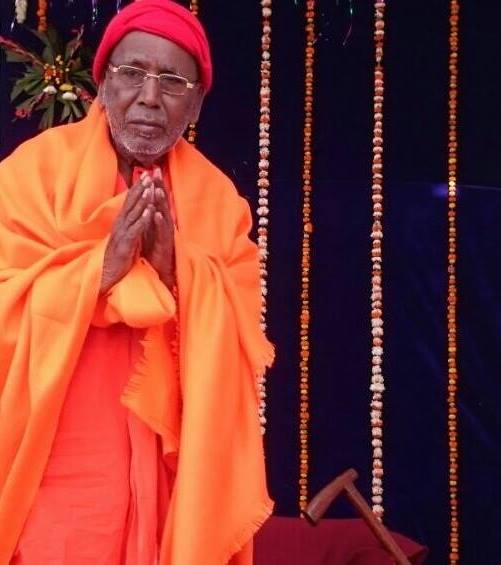
Swami Achyutanand of Kolkata, a Spiritual Successor of Maharshi Mehi Paramhans
"Swami Achyutanand Baba is one of the eldest living disciples and spiritual successors of Maharshi Mehi Paramhans, as well as an eminent scholar in the tradition of Sant Mat founded by Param Sant Tulsi Sahab of Hathras. Swami Ji has had the rare fortune of very prolonged close serving association of more than three decades with Maharshi Mehi, who appointed him as the founder editor of the spiritual monthly 'Shanti Sandesh' (Message of Peace), published by Maharshi Mehi Ashram, Kuppaghat, Bhagalpur, Bihar, India." (Pravesh K. Singh)
"The process by which the secret of how to realize God is taught is called deeksha or initiation. It is always rewarding to seek initiation from a Satguru or preceptor." (Swami Achyutanand Ji)
"Those practitioners who assiduously practice meditation will behold wonderful spectacles within." (Swami Achyutanand Baba)
"The practice of drishti yoga [meditation upon the Inner Light] calls for utmost devoutness and tenacity of purpose. The practitioner who assiduously and patiently practices this meditation will discover that the fickleness or unsteadiness of their concentration gradually ceases and their mind becomes tranquil. It is thus that they shall, with the piercing thrust of their focused gaze, be able to break open the 'tila dwara' (the Third Eye).
"This is why Gurudev (Maharshi Mehi Paramhans) said, 'Drishi yoga abhyasa atihi karatahi karata, kampani sahajahi chhutai praudha hovai surat. Tila darvaza tutai nazar ke jora se. Are han re 'Mehi' lage takataki khuba, jora barajora se.'
"Translation: 'Through regular, rigorous practice of 'drishti yoga' (Meditation on the Divine Light within), one's attention no longer remains wavering or unsteady, as the surat [the attention-faculty of the soul] slowly matures (becomes absolutely fixed, stilled).'Tila dwara (the Tenth Door or the Third Eye) will break open by the thrust of the focused gaze... So continue gazing inside constantly with all of your attention, says Maharshi Mehi Paramhans ji Maharaj.'" (Swami Achyutanand Baba)

Swami Vyasanand Ji Maharaj of Dehradun, a Spiritual Successor of Maharshi Mehi Paramhans and Swami SantSevi Ji Maharaj
Surat Shabd Yoga -- Meditation Upon the Inner Sounds and Sar Shabd
In, The Inward Journey of the Soul (Chal Hansa Nij Desh), Swami Vyasanand says, "The question arises: What is the secret of correct technique for Shabd (Sound) meditation? Sant Radhaswami says: 'Focus your consciousness stream on the Inner Space. You will find the Divine Sound which will lead you beyond the snares of this illusory world.' You should focus your consciousness or inner Current in the middle of the eyebrows -- the meeting point of the Ida and Pingla channels -- which is known as the tenth gate, Sushumna, Ajna Chakra or third eye. The practitioner will attain one-pointedness through this practice. In other words, the subtlest and most luminous sign of the light realm (bindu) will appear. With that luminous sign the inner Sound will also manifest.
"Sant Paltu Sahab says; 'Out from that burning light comes the Divine Sound, and only the one immersed in the Samadhi (meditation) of Divine knowledge can hear, none other.' This is the Sound that is heard when concentrating on that first mark of light. Due to carelessness, it is possible to also hear the other sounds of the lower realms that have the potential to distract the consciousness Current. It is conceivable then, that the upward ascent of consciousness becomes distracted, thus creating a hindrance in progress. This is because only the Central Sound has the power to attract the consciousness to the center and carry the soul to the center of a higher realm. Other illusory material sounds do not have that magnetism to attract the consciousness to the higher realms.” (Swami Vyasanand Ji Maharaj)
More from Swami Vyasanand: Sant Kabir Sahab says: "A rare practitioner who abides by the knowledge given by the Guru listens to the subtle Sound of Inner Space. First that Sound emanates from the bindu or Ajna Chakra (third eye). A practitioner who can withdraw his mind from the nine gates of the body and concentrate in the tenth gate, he or she alone is able to hear that subtle Sound."
"Sant Tulsi Sahab says: 'Enter into the Inner empty Space (Shunya) of Sushumna and listen to the Sound that is beckoning you toward the Divine. This Sound has been vibrating since the beginning of creation. If you want to meet your True Friend (Supreme Being) then constantly and carefully listen to that Sound. This body is the sacred holy place (Ka'ba, the holiest place in Islam) created by the Divine, and within it is found the arch (the higher realms of macrocosm beginning from the tenth gate). It is the inner sanctum within, in which is found the Divine Sound reverberating. O practitioner, listen with full concentration; the Sound that originated from the Divine is constantly reverberating and calling you.'
"Someone must have asked, generally, if the Sound is not heard with the physical ears then with what kind of ear is this subtle Sound heard? When the mind becomes concentrated, then the physical sense of hearing becomes quiet and one does not hear. This occurs because the attention withdraws from the senses and one is unable to hear physical sound.
"In response Sant Tulsi Sahab says: 'A practitioner who is able to focus in the Sushumna or the tenth gate for some time will experience the opening of the inner subtle hearing faculty. That inner sense of hearing is also known as the consciousness Current.' My Guru Maharshi Mehi says: 'A practitioner hears the sweet Sound of the flute through the stream of inner consciousness.'
"When the outer ear ceases to hear and the mind is fully concentrated within, then the inner hearing opens up and the practitioner can hear the Divine Sound within (through the inner ear). From this, do not infer that a deaf person could easily hear that inner Sound, because complete concentration is the key, not a lack of physical hearing. Sants have articulated about the closing of three gates of the body to experience the inner Sound. The three gates are eyes, ears, and mouth. Close these and, only then, can one hear the inner Sounds. According to Sant Kabir: 'Close your eyes, ears, and mouth, and listen to the Anahad (inner Unstruck Divine Sound).' Sant Nanak Sahab says: 'Close the three gates and listen to the reverberation of the Divine Sound.' Sant Maharshi Mehi and also Sufi Sants have used similar vocabulary to describe the process of closing three openings for hearing the inner Sound.
"I have heard accounts of some practitioners who follow unusual sound meditation practices and claim to hear sounds. However, these gross-material sounds are imaginary or generated by metabolic functions and blood circulation. An ear disease can also create a humming sound that can be mistaken for the inner Divine Sound. Some false gurus boast about their imaginary inner experiences of Divine Light and Sound in order to impress their followers.
"Other Hatha Yogis perform postures (asanas) such as mula bandh (contracting the muscles of lower organs), uddiyana bandha (contracting the abdominal muscles and diaphragm that involves breathing exercises), and jalandhara bandha (throat lock to the flow of energy in the nerves and blood flow in the neck). Some practitioners use ketchari mudra (touching the root of the palate with the tongue) and attempt sound meditation in that mudra. Still others try to listen from the right or from the left ear. Some listen from below ‘the tenth gate’ and others above 'the tenth gate.' Some press their eardrums with their fingers and hear vibrations and think them to be the Divine Sound. Some stare at the tip of the nose; some listen to music in the dark, and some in the light. Some place their head down, others straighten their chest. In today’s world, in the name of the Divine Sound there is a prevalence of a great variety of illusory and imaginary practices claiming to be techniques of Sound meditation. These are not only against the teachings of Sants but are also incapable of providing any real inner experience of Divine Sound.
"Sant Tulsi Sahab declares: 'Without the true knowledge of the Yoga of Sound, all efforts are hopeless. Only a Satguru who is accomplished can impart this knowledge about the different forms of Sound.' Therefore, Maharshi Mehi says, 'Practicing Sound Yoga (Inner Sound Meditation) is not child’s play.' Sant Kabir says: 'Without practice of this Sound meditation man is subjected to birth and death.' Therefore having learned from an accomplished teacher, the practitioner would gain the ability to hear the Celestial, not illusory, sounds."
-- Swami Vyasanand, "The Inward Journey of the Soul" (Chal Hansa Nij Desh), Translated from Hindi to English by Prof. Veena Howard, available as an Amazon Kindle e-book


