Powered By Blogger
Showing posts with label hathras. Show all posts

Sunday, February 09, 2025

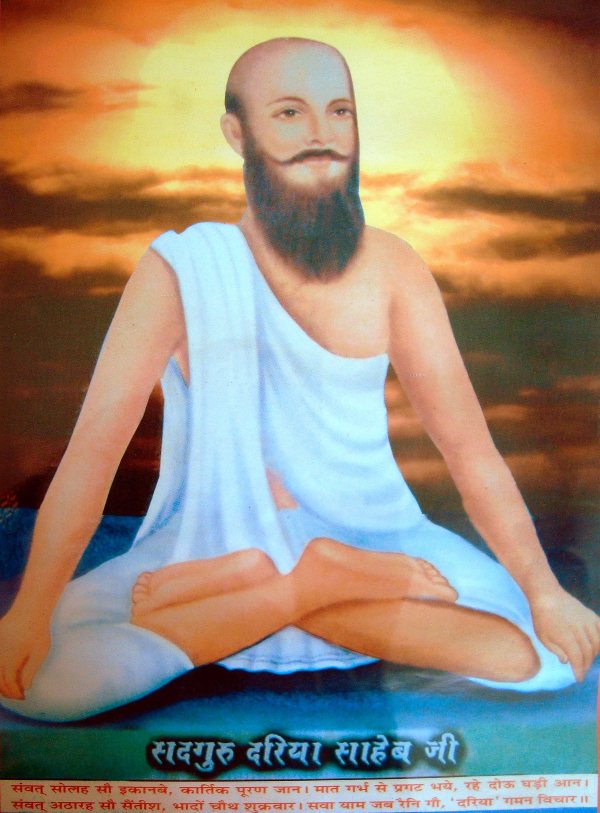
The Case for Sant Tulsi Sahib's Guru Being Sant Dariya Sahib of Bihar Revisited, By James Bean - Sant Mat History Revisited


The Case for Sant Tulsi Sahib's Guru Being Sant Dariya Sahib of Bihar - Sant Mat History Revisited, By James Bean


I believe the strongest case by far that can be made is that Tulsi Sahib's guru was Sant Dariya Sahib of Bihar. Still further back in time, Dariya Sahib connected back to the Sant Dharam Das line of masters associated with the Kabir tradition. The Dariya connection also explains the closeness between Radhasoami and Dharamdasi teachings, writings and practices: the use of the Five Names, the centrality of the Anurag Sagar and similar Kabir spiritual classics, the more openly esoteric approach to the inner regions, also the inherited view that Dharam Das "was the successor of Kabir". Those are all very Dharamdasi views not shared by other Sant groups (or Sikh sects).


"...Most of the other early sant poets rarely refer to their human gurus by name..." (David Lorenzen, Kabir Legends and Ananta-das's Kabir Parachai)


We of course would prefer Tulsi Sahib to place some sort of legal document into his poetry saying something to the effect, 'I, Tulsi Sahib of sound mind wish to go on record declaring that [..............] was my Satguru'. Would be nice, but as Lorenzen observed, sometimes the Kabir's, Nanak's and Tulsi Sahib's of the tradition don't always spell this out clearly in their banis and bhajans, at least in the writings that have survived.


But there can be serious clues offered sometimes, one of those being, when a Sant mentions previous Sants, most of those being fairly famous, such as a Kabir, Nanak, Ravidas, Paltu, etc... and there's one contemporary, obscure name on their list. THAT'S worth paying attention to, as they may very well be telling us who their guru was! For instance, here's a hymn of Maharshi Mehi naming many past saints and mystics, and on his list happens to be one obscure contemporary mystery figure by the name of Satguru Devi:   


“Great praise to all the Saints!

In which manner will one pray to them?

My mind is so very dirty and inexperienced,

Saints being destroyers of sorrows do away with the worldly traps,

They are the treasure-troves of knowledge and meditation,

Highly proficient in the techniques of single-minded concentration

and the Yoga of Sound,

They propagate the same in plain language all over the world;

Great are the Sages and Saints like Buddha, Shankar and Ramanand

for eliminating sins,

Sacrifice to the magnificent Saints like Kabir, Nanak,

Goswami Tulsidas and Tulsi Sahib,

Dadu, Sundar Das, Sur Das, Swapach, Ravi Das, Jagjivan, Paltu, etc…,

They are all great benefactors, delivering human beings

from the fears of the world,

Satguru Devi and other Saints are also highly adorable,

Maharshi Mehi sings their magnificence and lies prostrate

at their sacred feet with faith and love.”

(Maharshi Mehi Paramhans, Book of Padavali, Hymn #2: Hail to the Sants)


Satguru Devi was indeed the guru of Maharshi Mehi: Baba Devi Sahab of Moradabad.


"Swami Shiv Dayal lists his predecessors as ‘‘Kabir Sahab, Tulsi Sahab, Jagjiwan Sahab, Garib Das ji, Paltu Sahab, Guru Nanak, Daduji, Tulsi Das ji, Nabha ji, Swami Hari Das ji, Sur Das ji, and Raidas ji; and among Mohammedans, Shams-i-Tabrez, Maulana Rumi, Hafiz, Sarmad and Mujaddid Alifsani”’ (Sar Bachan: Prose [Dayalbagh version], verse 39, pp. 29-30)." (Mark Juergensmeyer, Radhasoami Reality)


"The family originally emigrated from the Punjab, where Shiv Dayal’s grandfather, Seth Malik Chand, was an official in the court of a princely state.’ His father, Seth Dilwali, settled in Agra and became a moneylender, a common occupation for a member of his caste. The family had been followers of Guru Nanak; this might suggest that they were Sikhs or Nanakpanthis, a term that refers to people who venerate the first Sikh master, Guru Nanak, to the exclusion of the other nine. Whatever was the case, the family turned in a different direction during Swami Shiv Dayal’s childhood—towards the spiritual tutelage of a local holy man named Tulsi Sahib." (Mark Juergensmeyer, Radhasoami Reality)


In the Radhasoami literature Sant Tulsi Sahib is named, a contemporary master not famous all over India such as Dadu, Surdas Ravidas, etc..., and he turned out to be the guru of Swami Ji, the family guru of Swami Ji's family and the family guru of Radhaji.


Honoring Tulsi Sahib's Own Words


Tulsi Sahib mentioned dozens of times Sant Dariya Sahib of Bihar in his various books: "I have seen the Form which, indeed, is formless and beyond all description. It is boundless, having neither beginning nor end. Dariya Saheb says that when his mind became humble and meek, he was able to cross the ocean of existence." (Param Sant Tulsi Sahib, S.D. Maheshwari, page 125)


“Listen, O Phool Das, I have given out the same true secrets which Sants like Kabir Saheb, Dadu Saheb, Rai Das Ji, Dariya Sahib, Guru Nanak, Soor Das Ji, Nabha Ji and Mira Bai have spoken of. They, too, have composed similar hymns describing the bliss of the highest spiritual region, whose glory I also have sung, blessed by the grace and the dust of the holy feet of Sants.” (Ghat Ramayan section, Param Sant Tulsi Sahib, translated by Sant Das Maheshwari, page 148)


Again, the same situation there with Tulsi Sahib naming many famous past Sants along with one obscure contemporary master, as T.R. Shangari Ji also observes:


"Among the saints whom Tulsi Sahib himself singles out in Ghat Ramayan as Satgurus (true masters) are Bu-Ali Qalandar, Jalaluddin Rumi, Kabir Sahib, Dadu Dayal, Rai Das Ji, Dariya Sahib (who may have been Tulsi Sahib's own Guru), Guru Nanak, Surdas Ji, Nabha Das Ji, Mansur, Mirabai, Sarmad and Shams-e Tabrizi." (Tulsi Sahib - Saint of Hathras, new expanded 2017 edition, Puri, Sethi, along with a new editor by the name of Dr. T.R. Shangari, page xiii:  https://scienceofthesoul.org/books-EN-031-0.html   )


Nice to see this reference to Dariya from the Beas satsang. Many of those in India can read all of the writings of Tulsi Sahib in the original Hindi. Those having access to the total number of references to Sant Dariya by Tulsi in all his writings just might find the mentions and quotations from Sant Dariya of Bihar to be convincing.


From my paper on the origins of Sant Mat, The Sant Mat We Know Can Be Traced Back to Sant Dariya Sahib


Tulsi was born in 1763 and passed on in 1843. He would have been in his teens when Dariya Sahib of Bihar was still alive — old enough to have perhaps received initiation from Dariya Sahib of Bihar or one of his representatives, in other words. Dariya was a towering figure occupying some of that space in history between the time of Kabir and that of Sant Tulsi Sahib of Hathras. Dariya passed on when Tulsi was around seventeen years of age. Dariya Sahib appointed several Saints to be his spiritual successors: Fakkar Das, Basti Das, Sant Tika Das, and, Sant Guna Das, also contemporaries with Tulsi Sahib, who likely spent some time in Bihar. Bihar was, and remains, home-base of the Satsang of Sant Dariya Sahib.


“He [Tulsi Sahib] has freely used words of Braj, Avadhi, Rajasthani (Marwari), Gujrati, Punjabi and Maithili, which leads one to conclude that, like many other Saints, he must have traveled widely in V.P., Rajasthan, Gujrat, Punjab and Bihar.” (J.R. Puri, and V.K. Sethi, “Tulsi Sahib, Saint of Hathras”, 1981, RSSBeas Books, page 19)


If Tulsi hadn’t received initiation directly from Dariya by the age of seventeen, the references to Dariya Sahib in Tulsi’s writings still make sense if he received initiation from one of Dariya’s successors, which is another possibility. Anyone initiated by those successors would likely have much reverence for Dariya Sahib, the “great master” of Sant Mat during those days. The Origins of Sant Mat

https://archive.org/details/TheOriginsOfSantMatSachKhandPDF#:~:text=The%20Path%20of%20the%20Masters,precise%20history%20of%20the%20Path. 


While it's rather clear that Sant Dharam Das and his successors have had a demonstrable influence on the Sant Mat/Radhasoami lineage of recent history, it's a bit more difficult to document the historic connection from Dharam Das back to Kabir, and Kabir to Ramananda. There are differing schools of thought regarding their actual associations. The other day I noticed that David Lorenzen named another guru, an intermediate guru between Kabir and Kabir Panth gurus. I did find out some information about that person and will post it soon.


Long ago Mark Juergensmeyer mentioned the resemblance of the teachings of the Dharam Das Kabir gurus to those of Radhasoami:   


"I am grateful to the translator of the Beas book, K. N. Upadhyaya, a professor of philosophy at the University of Hawaii, for bringing the Dariya connection to my attention." (Mark Juergensmeyer, Radhasoami Reality)


"Dariya Sahib adds another link to the chain that connects the Radhasoami and Dharamdasi traditions..." (Mark Juergensmeyer, Radhasoami Reality)


"This connection between Dharamdasis and Radhasoamis, to which the Anurag Sagar has led us, is confirmed by another set of writings venerated by Radhasoami leaders but little known outside of Radhasoami and Dharamdasi circles: the poetry of Dariya Sahib. Dariya Sahib was an eighteenth-century poet who lived in a Dharamdasi region of Bihar and referred to both Kabir and Dharam Das as his predecessors." (Mark Juergensmeyer, Radhasoami Reality)


Saturday, April 27, 2024

Hymn (Bhajan) of Sant Tulsi Sahib: Dil ka Hujra Saf Kar - Light and Sound on The Path: Sant Mat, Radhasoami


Hymn (Bhajan) of Sant Tulsi Sahib: Dil ka Hujra Saf Kar - Light and Sound on The Path: Sant Mat, Radhasoami


“The original copy of ‘Ghat Ramayana’ written by Saint Tulsi Saheb kept in a glass case in the ashram of Saint Tulsi Saheb in Hathras, Uttar Pradesh.”

हाथरस, उत्तर प्रदेश में संत तुलसी साहब के आश्रम में शीशे के पिटक में रखी उन्हीं द्वारा रचित ‘घट रामायण’ की मूल प्रति (चित्र सौजन्य: पूज्य सत्य प्रकाश बाबा)

(Photo Courtesy of Pujya Satya Prakash Baba [and Pravesh K. Singh])


Sant Tulsi Sahib of Hathras had some Sufi or Muslim disciples. Sometimes he composed hymns for them, the most well-known of these being a hymn addressing Sheikh Taqi. The one below seems to be in this category. It was published in Ajaib’s Grace magazine, May-June 2003.


Param Sant Tulsi Sahib of Hathras, India:


Chorus:

Dil ka hujra (1) saf kar, jana ke ane ke liye,

Dhyan gairo ka utha uske bithane ke liye.


Translation:

Cleanse the chamber of your heart, so that the Beloved may enter,

Remove all the foreign impressions, so that He can take His seat there.


Verse:

Chashme dil se dekh yaha jo jo tamashe ho rahe,

Dilsita kya kya hai tere dil satane ke liye.


Translation:

See with the heart's eye the astonishing spectacle of this world,

Oh heart -- ravishing scenes appear there to entice you.


Ek dil lakho tamnna us pai aur zyada havis,

Phir thikana hai kaha uske tikane ke liye?


One heart, with many desires, and always the lust for more,

Where is there any place for the Lord to come and reside?


Nakali mandir masjido me jae sade aphosa hai,

Kudarati masjid ka sakin dukh uthone ke liye.


It is a great pity that, going in the false [imitation] temples and mosques,

The indweller of the true mosque [the human body] is made to suffer.


Kudarati kabe ki tu maharab me sun gaur se,

A rahi dhur se sada tere bulane ke liye.


We should listen with attention in the prayer niche of the true Kaaba, (2)

The Sound is coming from the Court of the Lord and is calling you.


Kyo bhatkata phir raha tu e talashe yar me,

Rasta shah rag me hai dilvar pai jane ke liye.


Why are you wandering around lost in search of the Beloved?

The way to reach the charming one lies through the shah rag (3)


Murshade kamil se mil sidak aur saburi se taki.

Jo tujhe dega faham shah rag ke pane ke liye.


O devotee, meet the Perfect Master with sincerity and patience.

He will give you the secret to find the shah rag.


Goshe batin ho kushada jo kare kuch din amal.

La ilaha allahu akbar pai jane ke liye.


If you do the practice for a few days, the inner way will open before you.

It is the path to reach Allah, the One God, the Most High.


Yah sada Tulsi ki hai amil amal kar dhyan de.

Kun kuran me hai likha allahu akbar ke liye.


This is the call of Tulsi: O practitioner, do the practice with concentration.

The kun [Shabd] described in the Koran, will take you to Allah, the Most High.


______


NOTES:

______


(1) A hujra is a small room for solitary meditation attached to a mosque.


(2) The Kaaba is the most holy place of Muslim pilgrimage in Mecca and the maharab or prayer niche indicates the direction facing the Kaaba in a mosque. The maharab or prayer niche of the true Kaaba is the third eye on the human forehead above and between the two eyes, alternatively called the Shiv netra or tisra til.


(3) The shah rag or "royal vein" is the central, subtle vein on the forehead that leads to Trikuti. It is also called sukhman nari.


Saturday, May 13, 2023

Hathras Tulsi Sahibi Satsang Discourses: Sant Mat Spirituality


Hathras Tulsi Sahibi Satsang Discourses: Sant Mat Spirituality


Complete Mahatmas, Genuine Saints came to the world in their respective times and kept on emancipating the living beings who were connected with them.  On completion of their time, they left the body as per the will of the Lord and went to the Lord and left their work [their spiritual mission] to the other saints when departing.


** Actually God appears through the medium of the Master, the Guru, so we have to search for a living Master.**


"Complete and imperishable (permanent) benefit is available only through the living Guru. In him is the magnetic power of the Great Consciousness or the dynamic Consciousness, the touch of which creates power in us and connects our soul to the Current of the Word (ātmā ko Shabda) that rises to the spiritual plane." She (the Sound Current) helps us by being with our organs. [The Shabd/Sound Current is the vital life force of the body.] Very fortunate is that soul who takes shelter of such a supreme saint (param santa kī sharaṇ)."


INITIATION Into Surat Shabd Yoga: ** The Jivatma (soul) being given Shabda is the first step of Guru devotion (guru bhakti). **


"Mercy of Satguru Sahib


"Only with the grace of the master, the knowledge of the path of Naam is obtained. The Complete Satguru, the true Saint, is the real form of Naam or Word. That's why the Sound is revealed within them. Only by breaking the bonds of mind, illusion and time is one free from the cycle of transmigration. The Naam is only something the soul experiences, which is possible only through the Master (the guidance, teachings and mentoring of the living master).


"Sahib ji teaches the meditation of Surat-Shabd or Sound yoga.


1) Surat is called soul, the attention faculty of the soul.

2) The Sound creates and permeates the whole universe.

3) The Surat, the soul, carefully focuses upon that musical Naam (the Word), listening and merging into the Sound.

4) By holding the stream of that Sound, the surat-soul returns to it's core, it's essence.

5) This practice can be learnt through training by a complete saint, a Satguru. Only a present teacher, a living teacher, can teach this sadhana, this spiritual practice.

6) This practice is simple so it is also called Sahaja Yoga, easy or natural yoga, the yoga of Sound.

7) There is no boundary or barrier of country, caste, sect, etc..., for this practice. All are welcome.

There is no need to sacrifice the world or give up your worldly duties for successful meditation.

This path is the way to die while living, the body of the seeker starts to numb. Due to full concentration in Simran, the soul is concentrated in the third eye behind the eyes and one merges into the Sound. That's why the soul tastes the nectar, the bliss, and shines in the light of the Sound. In this situation, the the seeker becomes unaware of the outside world. This is the situation of dying while alive [death before dying].  Sahib ji says: 


"The stream of Sound is the Word of the Lord in the whole universe or cosmos. This Word is the consciousness stream that reaches everything in the cosmos from the creator (the Supreme Being). This is the stream he created to connect the whole, the All. This is what he is nurturing in all. The Word or Sound is our foundation. By holding the notes of the same tune, the Divine Sound, you can get back to your core, your essence, and merge into It."


In our scriptures, there are many types of yogas like Hatha yoga, Mantra Yoga, Laya yoga, Raja yoga, etc…, but all of these remain confined to the limits of body and mind, have not been said to free the soul from the trap of mind and illusion.


The true master practices the spiritual Sound and Light that comes from beyond. By these methods of meditation, the soul becomes introverted through regular practice and hears the Melodious Sound within, and the soul reaches where the Sound is emanating from. This is the goal of the practice of Surat-Shabd-Yoga.


Satnam


Jai Sat Naam


Satnam-Satguru 


Mercy of Satguru Sahib Ji


Satnam - Satguru  


-- Satsang Discourses from the Hathras Satsang Associated With Sant Tulsi Sahib


Sant Mat Radhasoami Books, The E Library: Tulsi Sahibi and Maharshi Mehi Section - 

Recent Publications Related to Maharshi Mehi, Sant Tulsi Sahib of Hathras and Their Successors:  

https://SantMatRadhasoami.blogspot.com/2019/01/sant-mat-e-library-maharshi-mehi-sant.html


Tuesday, May 09, 2023

The Unknown Guru of Radhasoami History: Maharaj Girdhari Sahib, Part ONE - Spiritual Awakening Radio Podcasts


The Unknown Guru of Radhasoami History: Maharaj Girdhari Sahib, Part ONE - Spiritual Awakening Radio Podcasts


For many years some scholars and others curious about Sant Mat history have been puzzled by references in Radhasoami literature to a living master that Soami Ji Maharaj associated with and apparently was very devoted to. His name was Girdhari Sahib. However, little was known about this particular Guru, or his actual status in either Tulsi Sahib or the earliest Radhasoami communities... UNTIL NOW. During Part One of this two-part series we'll explore the evidence about Maharaj Girdhari Sahib of the Sant Tulsi Sahib Satsang and his association with Soamiji Maharaj (Seth Shiv Dayal Singh, Sant Radhasoami Saheb).


Spiritual Awakening Radio Podcast - The Unknown Guru of Radhasoami History: Maharaj Girdhari Sahib, Part ONE @ the Podcast Website:

https://SpiritualAwakeningRadio.libsyn.com/the-unknown-guru-of-radhasoami-history-maharaj-girdhari-sahib-part-one


@ Apple Podcasts:

https://podcasts.apple.com/us/podcast/the-unknown-guru-of-radhasoami-history-maharaj/id1477577384?i=1000612287263


Follow @ Apple Podcasts:

https://podcasts.apple.com/us/podcast/spiritual-awakening-radio/id1477577384


@ Spotify:

https://open.spotify.com/show/5kqOaSDrj630h5ou65JSjE


& @ Wherever You Subscribe and Follow Podcasts (Apple, Spotify, Google Podcasts, Amazon, Audible, Stitcher, PodBean, Overcast, Jio Saavan, iHeart Radio, Podcast Addict, Gaana, CastBox, etc...):

https://linktr.ee/SpiritualAwakeningRadio


In Divine Love (Bhakti), Light, and Sound, At the Feet of the Masters, Radhaswami,

James Bean

Spiritual Awakening Radio Podcasts

Sant Mat Satsang Podcasts

A Satsang Without Walls

Sant Mat Radhasoami

https://www.SpiritualAwakeningRadio.com


Tuesday, December 06, 2022

Solving the Mystery of Tulsi Sahib's Guru (Origins of Sant Mat Series) - Spiritual Awakening Radio Podcasts


Solving the Mystery of Tulsi Sahib's Guru (Origins of Sant Mat Series)


"Listen, O Phool Das, I have given out the same true secrets which Sants like Kabir Saheb, Dadu Saheb, Rai Das Ji, Dariya Sahib, Guru Nanak, Soor Das Ji, Nabha Ji and Mira Bai have spoken of. They, too, have composed similar hymns describing the bliss of the highest spiritual region, whose glory I also have sung, blessed by the grace and the dust of the holy feet of Sants." (Ghat Ramayan section of, "Param Sant Tulsi Sahib", Agra, page 148, 1979)


Spiritual Awakening Radio Podcast: Solving the Mystery of Tulsi Sahib's Guru (Origins of Sant Mat Series) - Listen, Download, Subscribe @ the Podcast Website:

https://SpiritualAwakeningRadio.libsyn.com/website


@ Apple Podcasts:

https://podcasts.apple.com/us/podcast/spiritual-awakening-radio/id1477577384


@ Spotify:

https://open.spotify.com/show/5kqOaSDrj630h5ou65JSjE


& @ Wherever You Subscribe and Follow Podcasts (Apple, Spotify, Google, Amazon, Audible, PodBean, Overcast, i Heart Radio, Podcast Addict, Gaana, CastBox, etc...):

https://linktr.ee/SpiritualAwakeningRadio


Tulsi Sahib (1763-1843) is viewed as being the adi-guru or founding spiritual master, the "great grandfather" of modern-day Sant Mat and Radhasoami. Most all recent Santmat sects trace their lineages directly back to him. Some believe that Tulsi Sahib, the great Saint of Hathras, never mentioned the name of his satguru in the writings that have survived. For them there is no answer to this question of who his initiating Sant Mat guru might have been. In recent years I have established my own view on this subject and have observed that Sant Tulsi did indeed mention the name of his guru on numerous occasions in the way that most disciples typically have done in their banis and bhajans (devotional hymns, mystic poetry). This name has been there the whole time in the English translations of his writings, and there are many more such references to the identity of this spiritual master if one can access and read all of the Sant Tulsi writings available in Hindi. All we need do is notice this particular guru's name as it appears in the various books attributed to Sant Tulsi Sahib of Hathras, India (Shabdavali, Ratan Sagar, Ghat Ramayan and, Padma Sagar).


In Divine Love, Light, and Sound, Sat Naam Saheb,

James Bean

Sant Mat Satsang Podcasts

Spiritual Awakening Radio

https://www.SpiritualAwakeningRadio.com


Friday, April 12, 2019

Sant Surswami of Hathras, India


Rare photo of an icon of Sant Surswami, the next guru of the Hathras satsang after the passing of Sant Tulsi Sahib in 1843


Thursday, February 02, 2017

PODCAST: The Origins of Sant Mat, Part 3: Dariya Sahib of Bihar -- Spiritual Awakening Radio


PODCAST: The Origins of Sant Mat, Part 3: Dariya Sahib of Bihar -- Spiritual Awakening Radio


santdariyawithhindicaptionppbbg


PODCAST: The Origins of Sant Mat, Part 3: Dariya Sahib of Bihar -- Spiritual Awakening Radio with James Bean -- Listen @ Youtube:


The Sant Mat We Know Can Be Traced Back to Sant Dariya Sahib

Sant Tulsi Sahib of Hathras, India was born in 1763 and passed on in 1843. He would have been in his teens when Dariya Sahib of Bihar was still alive -- old enough to have perhaps received initiation from Dariya Sahib of Bihar or one of his representatives, in other words. Dariya was a towering figure occupying some of that space in history between the time of Kabir and that of Sant Tulsi Sahib of Hathras. Dariya passed on when Tulsi was around seventeen years of age. Dariya Sahib appointed several Saints to be his spiritual successors: Fakkar Das, Basti Das, Sant Tika Das, and, Sant Guna Das, also contemporaries with Tulsi Sahib, who likely spent some time in Bihar. Bihar was, and remains, home-base of the Satsang of Sant Dariya Sahib. 

Sant Dariya Sahib: “Sat Purush is the living Lord, and His own son serves as the ladder. That ladder is continued through me, says Dariya. Fakkar Das, Basti Das, and Guna Das are the ladders proceeding from me. Whomsoever they appoint as their successors would also be known as ladders. Thus will my line of succession continue…. Those souls who remain in obedience to these successors, shall cross the Ocean of the world.

“How long will this line of succession continue? Kindly relate it to us in your own words, asks Fakkar Das. ‘Listen mindfully, 0 Fakkar Das, I explain this to you, says Dariya:

‘As long as the discipline of the Sound Current
is preserved unadulterated,
The line of succession will truly continue.
But when it is mixed with outer rituals
and display of external garbs,
My Sound Current will part company.
My Divine essence will depart,
And the souls will go into the mouth of Kal.
I shall then come to this world,
And shall proclaim the teaching
of the Sound Current again.
Proclaiming the teaching,
I shall found the line of succession [again].
And emancipating the souls,
I shall take them to my Abode…
For aeons I have been coming,
And imparting the teaching
of the true Sound Current.’”


God is the Ocean of Love and All-Consciousness.

In Divine Light and Sound, Gnosis, Peace, Jai Guru, Jai Sat Naam, Satya Raam, Radhasoami, 
James

* Website:

* Like the Sant Mat Radhaswami Page at Facebook:

* Introduction to Sant Mat Spirituality and Meditation:

* The Sant Mat Radhasoami Blog and Satsang E-Newsletter:


Saturday, January 28, 2017

PODCAST: The Origins of Sant Mat, Part 2: The Mystery of Tulsi Sahib's Guru


PODCAST: The Origins of Sant Mat, Part 2: The Mystery of Tulsi Sahib's Guru 


PODCAST: The Origins of Sant Mat, Part 2: The Mystery of Tulsi Sahib's Guru -- Spiritual Awakening Radio with James Bean-- Listen @ Youtube:


Tulsi Sahib (1763-1843) is viewed as the adi-guru or founding guru, the "great grandfather" of modern-day Sant Mat. Most all recent Sant lineages go back to him. Some believe that Tulsi Sahib, the great Saint of Hathras, never mentioned the name of his guru in the writings of his that have survived. For them there is no answer to this question. Tulsi's guru is simply unknown to history, period. In recent years I have established my own view and have come to believe that Tulsi did mention the name of his guru on numerous occasions. This name has been there the whole time. All we need do is notice it in the writings attributed to Tulsi Sahib.


God is the Ocean of Love and All-Consciousness.

In Divine Light and Sound, Gnosis, Peace, Jai Guru, Jai Sat Naam, Satya Raam, Radhasoami, 
James

* Website:

* Like the Sant Mat Radhaswami Page at Facebook:

* Introduction to Sant Mat Spirituality and Meditation:

* The Sant Mat Radhasoami Blog and Satsang E-Newsletter:


Saturday, April 23, 2016

Top Ten Recommended Sant Mat Books -- Light and Sound on the Path -- Newsletter of Spiritual Quotes & Satsang Discourses


Top Ten Recommended Sant Mat Books -- Light and Sound on the Path -- Newsletter of Spiritual Quotes & Satsang Discourses


The Illusion of Being Trapped by Our Own Beliefs: If we think that meditation practice is too difficult -- it's just too hard, that we aren't very good at it and can't possibly get very far, so shall it seem to be for us. If we believe God to be millions of light-years distant and our spiritual experience will remain cold and uneventful, so shall it seem to be for us. If we're stuck with the impression that the way forward will never be clear and spiritual guidance is nowhere to be found, so shall it seem to be for us. If however, we come to know that we can have quality meditations beginning right now, and there is no reason why we can't make much progress on the spiritual path during this life, so shall this come to be our experience. As Kabir says:

"If you place the Guru at a distance from you, then it is but the distance that you honour: If indeed the Master be far away, then who is it else that is creating this world? When you think that He is not here, then you wander further and further away, and seek Him in vain with tears. Where He is far off, there He is unattainable: where He is near, He is very bliss. Kabir says: 'Lest His servant should suffer pain He pervades him through and through.' Know yourself then, O Kabir; for He is in you from head to foot. Sing with gladness, and keep your seat unmoved within your heart." -- Songs of Kabir, Rabindranath Tagore


"The person who adheres to the meditation on the Supreme Being, the Ultimate Reality, as outlined in this book by Satguru Kabir, will have the effects of his past life karmas, his present life karmas, and future life karmas, uprooted. (A devotee, through deep meditation, identifies with the Supreme Being that is beyond all karmas and their effects. Karmas operate at the level of the mind/body complex, not at the level of Spirit.)"  -- Brahmn Nirupan of Kabir, Saying 333 


The Brahm Nirupan is another volume of the Kabir Sagar (The Ocean of Kabir) from the same Sant Mat lineage that authored the Anurag Sagar -- the Sant Dharam Das branch of Kabir Panth, the Path of Kabir representing Sant Mat, the Path of the Masters, in earlier times -- earlier generations of Sants practising Surat Shabd Yoga Meditation before the time of Sant Tulsi Sahib of Hathras, Sant Radhasoami Sahib of Agra, and Sant Dariya Sahib of Bihar. Brahm Nirupan, translated by Dr. Das, is now available via Amazon.


"O Dharam Dass! Before you, Chaturbhuj, Bankeji and Sahteji had been my disciples. You are the chief one among them. Through your lineage of forty-two generations, instruct the people about the Absolute, even as I have instructed you, and liberate them.

"I also instructed them how to destroy the powerful Kal by the knowledge of the Absolute. They became steadfast in this knowledge, and they will definitely liberate seekers from the bondage of the worldly ocean.

"These disciples gave up false, hypocritical and dualistic philosophies, and contemplated the single Absolute Being all the time. God has no form, so one has to meditate on the inner Sound and Light...

"And they always recited the one hundred and one names of Satya Purush, the Absolute. (Sar Nam or Sar Shabd is the Essence of all Names. It cannot be written or pronounced. It is the Unstruck Melody. It can only be experienced.) These disciples embody forgiveness, peace and compassion and, as liberated souls, they move around on the earth.

"They will teach any person about the incomparable power of the Essence of all Names, and how to meditate on it. But such a person must desire liberation and go to their refuge for instruction.

"By reciting the many names of the Supreme Being that signify His attributes, and meditating on Him, the devotee purifies his heart, and obtains Divine Knowledge. He then destroys millions of negative karmas of his previous births, and is no longer subject to the birth and death cycles." (Brahm Nirupan of Kabir)


"In meditation the ardent seeker obtains these seven attributes that assist him in his spiritual attainment:1. Swati or deep concentration
2. Sahaja or an easy disposition
3. Sindhu or depth of sincerity
4. Ankura or initiator of noble actions
5. Sravana or listening to words of wisdom
6. Sudaya or compassion for all beings
7. Sulila or virtuous conduct." (Brahm Nirupan of Kabir)


"The four virtues:
1. Discernment of the Reality from the unreality.
2. Detachment from worldly things.
3. The six assets:
i. Control of the mind
ii. Control of the senses and body
iii. Faith in the guru and scriptures
iv. Endurance in face of hardship such as weather, etc.
v. Indifference to religious rituals
vi. Proper concentration and meditation
4. Intense longing for liberation.)"


Prayer: "O Ocean of Love! You are in the form of inner experience, and you are immutable. You are in the form of knowledge and the giver of liberation. You are in the form of wisdom and you are imperishable. You are the ocean of bliss, and you are free of the limitations of time. You are immortal. Heartfelt salutations to you!

"You are changeless in the three periods of time -- past, present and future. You are beyond the perishable world, and the imperishable soul. You are free of all desires and are the giver of peace. Your form is perfection. You have given the knowledge of the Eternal Name to your devotees for their liberation. Heartfelt salutations to you!

"You are free of the troubles of the body and mind, and you are without beginning. You are immanent, indestructible, blissful, the embodiment of wisdom, the repository of perfect knowledge, the ocean of compassion, the protector of all, and the remover of their suffering. Heartfelt salutations to you!

"You are free of mental distractions, doubt, etc. You are the source of happiness and your power is the creator of all. You are the mine of compassion, the giver of light and eternal joy, and the destroyer of ignorance. Heartfelt salutations to you!" (The Brahm Nirupan of Kabir)


A Satsang Without Walls: This is the April 24th, 2016 Sant Mat Spirituality and Meditation Satsang Newsletter (Blog, Digest, Document, E-Booklet,) of much poetry and prose -- words of light and love from various spiritual Masters, spiritual classics or scriptures. Enjoy all of the readings below. May they provide you with some helpful satsang reading material wherever you are in the world, near or far, and lead to a further in-depth exploration of the teachings of the Masters, including from lesser-known or newly translated material you may not have encountered before in English.


This Sant Mat Radhasoami E-Newsletter is dedicated to the Path of the Masters (Sant Satgurus of the Past, the Living Present, and Future), and to the Supreme Being, the Lord of the Soul Who is the Ocean of Love and All-Consciousness, and explores the poetry, prose, spiritual discourses, books, scriptures, letters, prayers, ahimsa ethics, audio, videos, philosophy, cosmology, gnosticism, meditation, mysticism, and history of the Masters from a traditional Indian perspective that's non-sectarian, and might also include quotes from various world religions in harmony with the Way of the Saints, the Path of the Masters and Mystics.


NOTE: This newsletter is for educational purposes only. Fair Use of Quotations: "Copyright Disclaimer Under Section 107 of the Copyright Act 1976, allowance is made for fair use for purposes such as criticism, comment, news reporting, teaching, scholarship, and research..."


NOTE: This newsletter is supportive of, The Murar Declaration -- the universal principles of peace, affection, harmony and cooperation as outlined at the Sant Mat conclave known as Spircon 2010, a historic event held in Agra.


NOTE: The Usage of the Term "Sant Mat": "Sant Mat" means: "The Teachings ('Mat') of the Saints or Sages" or "Path of the Masters". In India it's common knowledge that the term "Sant Mat" was coined or adapted by Param Sant Tulsi Sahib of Hathras during the 19th Century. "Sant Mat" was adopted and popularized by Tulsi Sahib as a new name for this spiritual path or genre of mysticism, but the Sant tradition, with its many guru-lineages or branches, is a spiritual movement that dates back many centuries to ancient India.


"What's the use of receiving this human form if we do not serve others in thought, word, and deed. If we hold our thoughts only on worldly material things and refuse to think of that which is higher and more subtle, then our faith in the Transcendental will inevitably diminish." ("Quintessence of Yoga: Secret of All Success", a Sant Mat publication)


* The ARCHIVE of all past posts/articles/blogs is located here, and includes a search engine:
https://SantMatRadhasoami.Blogspot.com


"We usher in a new era, Sat Yuga -- the Age of Truth." (Proclamation)


Sant Mat Links -- Online Resources


* Spiritual Awakening Radio -- Many Podcasts Free and Available Online  -- A Satsang Without Walls at Youtube:

https://www.youtube.com/user/SantMatRadhasoami/videos

Subjects include: The Path of the Masters, Inner Light and Sound Meditation, Spirituality, Love, Compassion, Non-Violence, Peace, Being Vegan/Vegetarian, Gnostic Gospels, Rare Spiritual Classics, Saints and Mystics, World Scriptures, Sacred Texts, Poetry and Prose.


5/3/2016    Vegetarianism/Veganism in the World Religions, Part 3
4/26/2016  Vegetarianism/Veganism in the World Religions, Part 2
4/19/2016  Vegetarianism/Veganism in the World Religions, Part 1
4/12/2016  The Syriac-Aramaic Gnostic Saints and Mystics
4/5/2016    The Sound of Light -- Surat Shabd Yoga Meditation Practice
3/29/2016  The Yoga of Sound -- Inner Sound Meditation
3/22/2016  Hearing the Celestial Sound Current During Meditation
3/15/2016  Seeing and Hearing Beyond the Illusion
3/8/2016    The One God Who is Given Many Names
3/1/2016    The Magical Ingredient of Spirituality is Love -- Bhakti
2/23/2016  Seeing the Unseen, Hearing the Unheard, Knowing the Unknown
2/16/2016  The Path of Love and Devotion -- Bhakti


There is a military channel, but no peace channel. There is no twenty-four hour spirituality channel, but there is a golf channel -- several golf channels actually. Cable and satellite TV priorities.

"Attention is the most concrete expression of love. What you pay attention to thrives. What you do not pay attention to withers and dies." (Karen Maezen Miller)


* Daily Spiritual Quotes/Quote of the Day/Social Media
@ Facebook: Sant Mat Radhasoami:

https://www.Facebook.com/SantMatRadhasoami


* Introductory Page: Sant Mat 101, Introduction to the Path of the Masters:
https://www.SpiritualAwakeningRadio.com/sant-mat


Top-Ten List of Recommended Reading -- E-Books by Masters of Inner Light and Sound (the Sants of India)  -- These Books Are In Various Sections of the Sant Mat Radhasoami E-Library Online Here:

https://santmatradhasoami.blogspot.com/2019/01/sant-mat-radhasoami-books-main-page-e.html

1) The Brahm Nirupan of Guru Kabir -- A Journey to Enlightenment -- The Ultimate Reality [in the Kabir Section of the E-Library];

2) Excerpts from Shabdavali (Hymns) and the Ghat Ramayana of Sant Tulsi Sahib of Hathras [Maharshi Mehi/Tulsi Sahib Section];

3) Philosophy Of Liberation (Salvation, Moksha-Darshan): A Manuel of Sant Mat Mysticism, by Maharishi Mehi Paramhans -- The Goals and Practices of the Sant Tradition of India [Maharshi Mehi/Tulsi Sahib Section];

4) ALL the Writings of Soamiji Maharaj, Sant Radhasoami Sahib (Sar Bachan Poetry & Prose, Letters, Commentary on the Jap Ji, The Last Words) [RADHASOAMI Section];

5) Radhasoami Mat Prakash, by Huzur Maharaj (the very first Sant Mat book that appeared in the English language near the beginning of the 20th Century -- ALL the writings of Huzur Maharaj really, such as Prem Patra, volumes I-VI, represent a great "bible" or "encyclopedia" of Sant Mat. Also see, Prem Bani, volumes I-IV.) [RADHASOAMI Section];

6) A Spiritual Seekers Guide: Dayalpuri Radhasoami Prem Prabhakar Magazine, English Section, and Satsang Discourses (fabulous spiritual discourses liberated from a website that went dark -- glad to have made copies and rescued these) [RADHASOAMI Section];

7) The Way Out Is IN (An Introduction to Sant Mat Spirituality and Meditation), by Swami Ram Bihari Lal, successor of Sant Gharib Das, famous disciple of Soamiji Maharaj/Sant Radhasoami Sahib [RADHASOAMI Section];

8) Baba Devi Sahab, Disciple of Sant Tulsi Sahib and also Friend of the Radhasoami Faith (he was close friends with Huzur Maharaj Rai Saligram): Essential Teachings in English [Maharshi Mehi/Tulsi Sahib Section];

9) Harmony Of All Religions (Sarvadharma Samanvy, English Edition) – Exploring Inner Light and Sound Meditation in the Great World Religions and the Sant Mat Tradition, by Swami Sant Sevi Ji Maharaj [Maharshi Mehi/Tulsi Sahib Section];

10) The Inward Journey of the Soul: Chal Hansa Nij Desh, a new living master-book by Swami Vyasanand Ji Maharaj [Maharshi Mehi/Tulsi Sahib Section];

A NOTE about accessing the book site known as Scribd: To access books for free at Scribd, simply join the site and create a profile there, and upload a couple of documents that might be of interest to others that don't have copyright issues, then you should be able to view/read/download, etc... the books you're interested in at Scribd.


"The soul hears a wave of sound and rhythm that becomes visible... It opens the door -- unspeakable, indescribable. Going beyond rhythm and sight, one enters the gate of the tower of emptiness, where by means of the two doors of sight and sound one finds the level of highest reality (parbrahma). Then one sees the Sound Current issuing forth hundreds of universes, and Sound penetrates to the middle of them all, their crown jewel, which is tiny as an insect." (Sant Tulsi Sahib of Hathras)


Obtaining The Fourteen Jewels (Book of Brahm Nirupan)

O Dharam Dass! The person that meditates is, figuratively, churning the ocean of the WORD and obtains fourteen beneficial jewels. Listen to them! (Note: In Indian mythology the gods and demons churned the ocean of milk and got fourteen precious "jewels." The churning rod was mount Mandara, and the rope was Vasuki, the king of serpents. Satguru Kabir’s churning is different. It is churning of the Word inwardly. It is mystical and metaphorical and deals with accomplishments within the self.) ...

When the wise, discriminative devotee churns the Ocean of the WORD, fourteen "jewels" are obtained. (Note: The fourteen jewels of the Indian mythology are placed in brackets for comparison.)

The first is Love for Satnam, the name of God. (Lakshmi, the Goddess of Wealth, obtained from the churning of the Ocean of Milk in the mythology.) This love engenders sweet speech, friendliness, contemplation on the Divine, and discards mental agitation, lust, anger, etc... and endows perfect peace.

The second is Compassion. (Kaustubha, precious jewel worn by Lord Vishnu.) Do not use hurtful words, remove bondage and sins and increase love for others, protect the life of animals, etc... Compassion is a priceless jewel.
The third is Good Character. (Parijatak, the divine flowering tree identified with the wish-fulfilling tree.) The person of good character always performs good actions, whether those actions are continuous or temporary.

The fourth is the Sense of Service. (Dhanwantari, physician of the gods.) The person with this jewel serves those in need that are less fortunate, such as with food, clothing, comforting words, etc... It is a generosity of spirit.

The fifth is Bliss of the Self. (Madira, wine.) The person awakened to Self-knowledge is, figuratively, drunk with bliss. This Self-knowledge is the knowledge of the divine soul that produces unalloyed bliss.

The sixth is Forgiveness. (Kamadhenu, the wish fulfilling divine cow.) The forgiving person sincerely forgives others that have insulted him or lied to him, or have done wrongs to him. By the power of forgiveness his actions are purified, and his life becomes stress free.

The seventh is Contentment. (Airavat, the elephant of the god Indra.) The person with this jewel is satisfied with what is available to him. He is at peace and is blissful, and is not troubled by the problems caused by others.

The eighth is Awareness of Reality within. (Rambha, a celestial dancing nymph.) The world manifests in countless material forms, but they are all illusory, as they have no permanence. The Reality within is Spirit and it is eternal. The one having this awareness gets salvation.

The ninth is Seven-fold Knowledge. (Uchchaihshravas, the divine seven-headed flying white horse.) This seven-fold knowledge helps to unite the soul with God:

1. Good wishes for the welfare of all.
2. Right thinking or inquiry into the nature of the Self.
3. Self-reliance in body and mind for seeking Truth.
4. Subtle or inner Realization that the Self or soul is Absolute.
5. Detachment from Maya through Love and Devotion to God.
6. Surrendering to God, and not needing the four goals of life.
7. Knowledge of the Super-conscious State.

The tenth is True Faith. (Amrit, the nectar, drinking which one becomes immortal.) True Faith is like nectar. The person having firm faith in the words of the guru goes across this world of birth and death. He knows that the teachings that are unproven are false, and has firm belief in truth.

The eleventh is Devotion to the Self. (Sharanga, the bow of Lord Vishnu.) Practice the devotion and love taught by Satguru Kabir. With Self-realization, destroy the enemy that is the trap of Death.

The twelfth is Spiritually Knowledgeable Speech. (Shankh, the conch of Lord Vishnu.) The person with this jewel performs noble actions, meditates, reflects sound intellect, and sees the presence of God everywhere. He remembers God always, and keeps his mind united with Him.

The thirteenth is Auspicious Peace. (Shashi, the moon.) The person with this jewel always experiences bliss with no trace of suffering. He is saintly, destroys all defects of the mind, and knows that God is his support.

The fourteenth is Knowing the World as Poison. (Vish, the poison swallowed by Lord Shiva) The world is full of suffering, sins, delusions, hypocrisy, falsehood, etc. Peace is illusory and the mind is restless. The devotee must thus realize the world to be poison, and detach from it. It is being in the world but not of the world.

The devotee that churns the Ocean of the WORD and obtains these fourteen jewels will find peace, bliss and unity with God.

These fourteen jewels are the giver of salvation to the one that always meditates and obtains them. They reveal to him the pure light of God, and enable him to have unalloyed bliss. Those that are not so rewarded cannot enjoy such bliss.

The person that is absorbed in meditation on the Supreme Being remains free of the dualities of joy and sorrow, praise and criticism, attraction and repulsion, etc. He enjoys permanent happiness by becoming liberated in his present life. Such a great soul is free of the three-fold suffering, and lives for the sake of freeing others from the bondage they are in.

"Meditation of the Absolute Name as previously mentioned is the source of the fourteen jewels, and is the essence of the scripture. Contemplate this and become absorbed in the practice. By its power you will obtain eternal bliss. Sing the glories of the Essence of all Names. Satguru Kabir has made it clear that you will obtain salvation." (Kabir)

O Dharam Dass! Seeing your devotion and piousness, I know that you are a very good disciple, so I have happily revealed to you the secret knowledge. Now, keep it in your heart and enjoy eternal bliss.

-- THE BRAHM NIRUPAN OF KABIR
A Description of the Nature of Absolute Reality
(The Necessity of Liberation)
Translation by Jagessar Das M.D.


Being Conscious of the Absolute God Within All Things -- Everywhere I look, You Are

"The one who always knows the Absolute in his waking, sleeping, sitting, standing, walking or wandering, is a rare saint in the world." (Brahm Nirupan of Kabir)

"You are pervading and permeating all places and inter-spaces, O Creator. You made all that has been made. You created the entire universe, with all its colors and shades; in so many ways and means and forms You formed it. You are the support of the unsupported. In all places and inter-spaces you are the Giver, the Great Giver. Everywhere I look, You are. Lord, You have no end or limitation. You are pervading and permeating all places and inter-spaces; reflecting upon the Word of the Guru's Shabad, You are found." (Adi Granth, Sikh Scriptures, Gurbani)

Below is from the Brahm Nirupan


158. Think of a tree that has branches, leaves and fruit, etc... If someone wishes to have fruit, or leaves or branches, then he would take what he wants. Similarly, one who wants to realize the Name would seek it, instead of the countless other things available in the world.

159. In the same way, the Absolute has many "parts" such as nature, Maya and actions, the gods and the incarnations etc., as the Absolute is in all. According to the name of any part of the Absolute that the disciple hears from the guru, that is what he will firmly believe, and that confers knowledge of the Absolute.

160. It is possible to realize the parts of the Absolute as mentioned above, but to realize the causal and astral forms, and the seed that is the Absolute, that has within It the whole of creation, one needs the grace and compassion of the Satguru. It is not possible otherwise.

161. By the grace of the Satguru, when a spiritually wise person's mind is steadfast on the Absolute, it will be absorbed in the Absolute. At that time he will see the Absolute in everything, both inside and outside the gross and subtle manifestations. (In one of his couplets Kabir stated, "When I was, God wasn’t. Now God is, I am not.")

162. With such a vision he would see that the things that are far off or near, and the visible and invisible, the enemy that causes suffering, and the friend that brings happiness, and the things that he has or does not have, that all of these are really the Absolute. Such a person has equanimity of vision.

163. The person who has control over his mind and senses, and is governed by noble qualities is called a master. The one who performs service with a pure heart is called a servant. And the reason for the origin of all things is the cause, and the things that were created are the effect. All of these are the Absolute. The beginning, middle and end of creation are all the Absolute.

164. The realms of heaven, earth and hell are all the Absolute. Even the earth, water, air, fire and ether or space, are all the Absolute.

165. The living beings that have movement (man, animals) and those without movement (trees) in the whole world are the Absolute. The various gods and demons are also the Absolute. Even the demigods are the Absolute.

166. The one who has realized the Absolute sees Indra and the other multitude of gods, the celestial musicians, and the sun, moon and stars, as the Absolute. Therefore who has realized the Absolute, sees the Absolute everywhere.

167. The upholder of the world, and the things that are thinkable and unthinkable are the Absolute. The gross, astral and causal manifestations that are the world, are also the Absolute.

168. The realized saint has the true knowledge that the whole world is the Absolute. To say that this is a body, and that is a piece of cloth, is false. Whatever you can see is no other than the Absolute. (Seeing differences in objects occurs in the relative world of duality.)

169. The one who always knows the Absolute in his waking, sleeping, sitting, standing, walking or wandering, is a rare saint in the world.

-- The Brahm Nirupan of Kabir: A Journey To Enlightenment -- The Ultimate Reality, translated by Dr. Jagessar Das, Kabir Association


Soami Ji Maharaj, Sar Bachan Radhasoami Poetry: "Why flounder on this side of the eye-focus? Peep into the opening of the third eye and cross over. Learn the technique from a master, dear friend -- without his help this door will not open. Practice that technique with love and devotion (Bhakti) -- conquer your mind and take your soul across into sahaj [natural state of the soul]. The soul will then advance with the help of Shabd [Sound Current] to a place where a stream of nectar constantly flows."


"The Word is Soami and Surat is Radha, and this dhar of Surat that turns back and merges into the Shabd (Word) sings 'Radhasoami'. When you sing the name 'Radhasoami', you do the simran of the ‘Five Names’." (Sant Garib Das/Gareeb Das, Book of Anmol Bachan)


"You have to see for yourself how much importance you have given to the practical aspect of Santmat. How much desire is there for Satsang? Such an approach reveals the purity of heart. Without purity and without the help of that Great Power, the Supreme Being, transformation is impossible. The person who is endowed with devotion and dedication alone can do sadhana [meditation practices] and enter the subtle world."  (Spiritual Seekers Guide)


"Without Love Divine man cannot concentrate at the spirit pole [third eye center within in meditation]. The human mind is attracted to so many things in day to day life and they all cause an impression on it although they do not in any way enrich or ennoble it. But man’s mind rebels when he attempts to concentrate at the spirit pole. So man must possess 'Bhakti Ang' or Love Divine in order to realize the Truth. Only such gifted souls are fit for deriving the full benefit from the teachings of Saints and Seers. However if this criterion is made for admission into Satsang very few people will be found fit for it. So the doors of Satsang have been thrown open for all." (Spiritual Seekers Guide)


"A true devotee who performs spiritual practices prescribed by the Living Spiritual Master knows that he is able to gradually throw off the poison which accumulated in his present life and the past ones..."

"Looking at his limited resources, the Supreme Father comes down on this planet and awakens the unlimited potentialities inherent in man. Man possesses 'the atom of spirit' which has unlimited powers. Unfortunately there are too heavy coverings over it. Man is unaware of this potential power. The Supreme Father sends Saints and Seers for those who yearn for awakening this power. The moment such an individual comes in to contact with messengers of God, his spirit power is ignited. With little effort from his side and with the help of the Master, he is able to cast aside the coverings over his soul. As the coverings go off, he feels lightness and develops power of penetration into the past and the future. When all the coverings are thrown off, he becomes one with Supreme Father. There is no difference between him and the Supreme Father. Attainment of this state is real freedom [jiva mukti]." (Spiritual Seekers Guide)


Worthiness of a Spiritual Seeker

A serious seeker has to prepare a fertile ground within his or her inner Self. The prerogative of God-realization and attainment of the vision of the Divine only belongs to the atman (inner Self) or consciousness within the body. However, it is not possible to accomplish this while engrossed in the distractions of the mind and the body. It is only possible by being free of these distractions while living in the body. To be liberated from the sensory distractions is no easy task. However, it can be achieved with the grace of the Satguru (true teacher). For this, a practitioner must be determined, morally upright, and follow the instruction of the guru. Without these, it is impossible to obtain the grace of the guru. The practitioner can only diligently perform sadhana (literally, exertion to attain an objective, meditation, spiritual practice), but only the grace of the guru yields success in the endeavor. To attain the due rewards of sadhana [meditation practice] it is important to follow the gurus’ instruction vigilantly and steadfastly. Resolve means: not wavering from the path in any situation…

To create resolve in seekers, the Sants give specific guidance:

First, keep a diligent meditation schedule as instructed by the guru.

Second, leave all desires except the yearning for seeing the Supreme Being.

Third, keep in mind the reverence of the guru.

Finally, observe instructions of the guru as the highest duty and consider the guru as the dearest of all.

Students who can follow the above instructions are qualified to follow the path.

For success in meditation it is important for a sadhak to be cautious in the following ways:

* Following the example of a crow: be repetitive (always at it, never giving up), always remaining vigilant and attentive in sadhana, and in following the guru’s instructions.

* Have concentration similar to that of a crane: always be attentive at listening to the teaching of the guru;

* Nap or sleep similar to that of dog: be willing to follow the instructions of the teacher without laziness;

* Eat less: cultivate a sense of detachment from all physical pleasures and bodily desires;

* Finally, detachment: indifference to the ‘ups and downs’ of home and family relations.

It is important that a student should cultivate these qualities. Without the grace of the teacher, progress on the spiritual path and attainment of the Divine is not possible.

A seeker should pay attention to five factors:

1. Receive the teachings of the guru with great attentiveness.

2. After listening to the teaching, learn the esoteric techniques (diksha, initiation) from the guru for treading the spiritual path.

3. Make a diligent effort to succeed in the tests presented by the guru.

4. Joyfully endure the trials and obstacles on this arduous path.

5. Cultivate patience and perseverance.

Just as a traveller withstands the pains of the journey and calmly endures the delays of the train and discomforts of the railway station, in the same manner, the spiritual traveller on the Divine path, although not seeing the Divine for many years, does not waiver from the path. Rather, the seeker endures the delay, and keeping faith in the guru’s words, enthusiastically waits for the moment of Divine realization.

Infinite knowledge is like an ocean with unlimited water. The ocean makes its water available to anyone who wishes to draw from it. However, the person who wants to draw water from the ocean is only limited by the capacity of his vessel for carrying the water. It is not the fault of the ocean if humans are limited in their capacity to draw water. Those who have bigger vessels have the capacity to carry the most water. In the same way, humans vary in their capacities to draw from the Divine Ocean of knowledge.

In the words of Sant Maharshi Mehi: "All the Sants are said to be impartial and are equally compassionate toward all beings and their grace showers like the rain, equally on everyone. Nevertheless, just as the flowing rainwater gathers only in the deep hollow places, the grace of Saints gathers in the hearts of those disciples whose hearts are emptied from worldly distractions and whose devotion is deep. They are ready to receive the grace of the guru. Furthermore, a devotee through service becomes eligible for the guru’s grace and, not surprisingly, attracts the teacher’s grace. Those who are careless and do not tend to the vessel of their hearts are able to hold only a little that the guru offers. Others, who are diligent in caring for the vessel, gain benefit by attracting the grace of the guru. In the teachings of Sants, this is the secret of serving the guru and following his teachings. Those who learn knowledge from the guru become humble and grateful and the devotion to the guru arises in their hearts naturally and effortlessly."

The seeker is like a vessel. Some vessels are small and hold very little substance. Other vessels are deep and wide and can hold large amounts. And still again, some vessels are very shallow and hold almost nothing. In this way, a seeker attempts to make himself or herself like a deep and wide pot which is capable of holding a great deal.

-- Swami Vyasanand Ji Maharaj, The Inward Journey of the Soul (Chal Hansa Nij Desh: O, Swan-Soul Return to Your Abode), Kindle e-book (and via Kindle APP) translated into English by Professor Veena Howard


From Light to Sound, From Form to Formlessness -- Stages of Meditation on the Path of the Masters

"These various kinds of meditation, both gross and subtle, have been described by the Sants in the following ways. Withdrawing from all other physical names and sounds and only focusing on the name given by the guru is called: 'material but Formless meditation.' Withdrawing from all material forms and focusing on the image of the deity as taught by the guru is called material-visualization meditation. The meditation on the point or bindu is the subtle form of meditation. The meditation on the countless Divine Sounds is considered the subtlest form of meditation since it does not require visualization or focus on any form. This is called the most subtle and Formless meditation.

"When we close our eyes and do not see any objects, this does not mean that there exists nothing that can be seen. In other words, the shapeless darkness is also an object. Unfortunately, we cannot even see pure darkness because we are constantly thinking about the images of the world, and instead of seeing darkness we see the imaginary sights projected on the screen of inner mind. Without practising the meditation of focusing in the darkness, it is not possible to see the subtle Light that lies deep within. The experience of Divine Light in the meditation brings joy, and the progress then becomes rapid. Consequently, one's faith and conviction becomes stronger. Goswami Tulsi Das says: 'This form of meditation of the Divine is easy and gives joy; who will not enjoy it.'"

-- Swami Vyasanand Ji Maharaj, The Inward Journey of the Soul (Chal Hansa Nij Desh)


"By practising devotion through these four techniques -- Manas Japa ([simran, mantras, zikhr] recitation of the Divine name), Manas Dhyana (focus on the Divine form), Dristi Sadhana (focus on the infinitesimal point [third eye center and inner Light), and Nadanusandhana Yoga (concentration on the inner Divine Sounds [Surat Shabd Yoga]) -- the practitioner consecutively transcends the realms of darkness, Light, and Sound which cloak the Supreme Truth -- the Divine Reality."

-- Swami Sant Sevi Ji, "Harmony Of All Religions" (Sarvadharma Samanvy) -- on Inner Light and Sound Meditation in the Great World Religions and the Sant Mat tradition


"The meditation on the Sound is Formless and transcends the realm of name and form. Through this meditation the practitioner reaches the Supreme Being. Through this path the meditator goes beyond all obstacles and achieves the ultimate freedom from the cycle of birth and death. The practitioner becomes free from taking birth in this world. The practitioner whose consciousness grasps the Central Sound even once escapes the afflictions of time and death. This practice of meditation is the direct path as was stated by the Prophet Mohammed. By treading this path the practitioner reaches the untainted destination of Khuda (a word for God in Urdu) or the realm of the Supreme. This path of meditation is described by Jesus as the eye of the needle, and by going through it one attains the Kingdom of Heaven. This is the path leading to Nirvana as described in Jainism and Buddhism. This is the Unstruck Sound (Anahat Shabd) revealed by Guru Nanak, which is heard by closing the ears, eyes, and mouth. This meditation is the essence of all the different religions, all sacred texts and the core message of all Sants and sages. This meditation takes the practitioner to the ultimate goal. Without this meditation the existence of any religion, sect, or path is incomplete."

-- Swami Vyasanand Ji Maharaj, The Inward Journey of the Soul (Chal Hansa Nij Desh)


"Once established in Light, the practitioner hears various types of sweet inner melodious Sounds. The saints have named this Sound the Anahad (Un-struck, self-producing Divine Sound). Through the technique of Shabad Yoga (Yoga [Meditation] of Divine Sound) the practitioner goes beyond these Sounds and enters the Eternal Sound... Through this the practitioner reaches God (Paramatma -- the Supreme Spirit) and reaches the point where the distinction between the devotee (practitioner) and God (object of worship) disappears. The soul which is united with the Supreme Soul, becomes the Supreme Soul. This State is known as Moksha, Nirvana, or Mukti (Absolute Freedom)." (Swami Sant Sevi Ji, Chapter on Jainism, Book of Sarvadharma Samanvy -- Harmony Of All Religions)


Ethical Teachings of the Radhasoami Faith

Do unto others as you wish others to do unto you.

That action which helps the approach to the Holy Feet of Radhasoami, is good, and that action which creates separation or distance, is bad.

Do whatever you like, but do not wound the feelings of your neighbors with taunting terms and wounding words.

Religious discussion should be avoided, for therein is greater danger of wounding a man's heart than in anything else.

Do not force your ideas on others. It is undesirable. Wait till the aspirant has acquired the necessary development of mind.

Clemency, love, tolerance and happiness should be the characteristics of a devotee's life.

Happy mood does more work than anything else.

Love should be centered in the Ideal. Love which is not grounded on the Ideal, leads one astray. Love a man, but love with unselfishness and warmth of mind. Keep your deed, word, and thought under control, lest they wound some one. A deed done to injure an individual is like a sword stabbing hard. Foolish words spoken at random are pointed arrows which make some man's heart their target. So beware of speaking random words.

If you are great, neither give an affront nor hear it. If you are small, let humility be your refuge, but see that you do not lose your self-respect.

Man's superiority lies in the "greatness of his Soul" and not in pomp and public show.

Be "man," "entire and whole" and in everything.

-- Shiv Brat Lal (Data Dayal), a disciple of Huzur Maharaj Rai Saligram Bhadur
Light on Ananda Yoga -- The Yoga of Happiness,
Published in India, and long ago in English by Sant Bani Ashram