Powered By Blogger
Showing posts with label simran. Show all posts

Monday, June 29, 2026

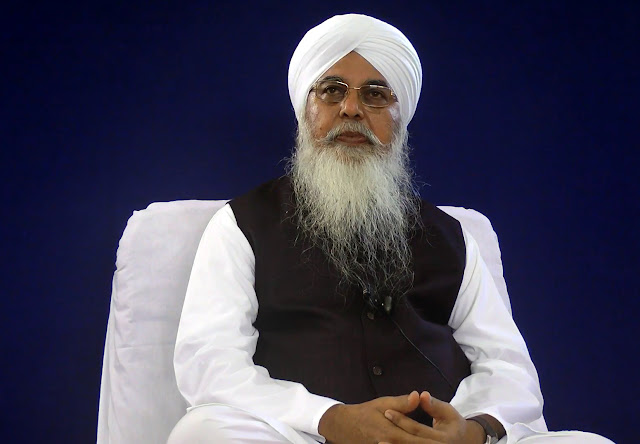
The Beginning of Spiritual Practice: Simran, the Repetition of Sacred Divine Names, by Baba Ram Singh (Sant Mat)


The Beginning of Spiritual Practice: Simran, the Repetition of Sacred Divine Names, by Baba Ram Singh


Simran: Repetition of names or thoughts; in Sant Mat, the simran [remembrance] of worldly thoughts is controlled through the Simran of the Five Charged Names, repeated by an initiate throughout the day and when sitting for meditation as a means of collecting the thought currents at the Third Eye Center; also used as a password of sorts to higher planes and protection from Negative Power influences. (from the 2023 Sant Mat Glossary of terms)


Baba Ram Singh: We should make good use of our time... All the Saints have sung praises of Simran, and it is very important that we perfect our Simran. Because as long as we are not able to perfect our Simran, the rest of our Path doesn't open up.


We should try to perfect our Simran all the time. We should always be at it. When we are walking or doing other things, when we are sitting idle, we should try to focus on our Simran and perfect our Simran. Because we get a lot of time like that, which is otherwise wasted. So, we should try to perfect Simran at that time.


When you continuously do your Simran, initially, we do Simran with our tongue. But as we perfect our Simran, and it becomes a very regular activity — our mind starts doing that Simran. Then the mind continuously does the Simran.


When we attain that state — where the mind is doing the Simran — then our Path opens up, and we see that we are withdrawing within.


So, we should focus while doing our meditation. We should focus on our Simran. If we are not able to get the contemplation of our Master, it doesn't matter. You should focus on all the Words of the Simran and pay attention to the Simran and keep doing that.


We should not worry that we are not getting the contemplation of our Master. We must realize that the Master is always within us. In the form of the Holy Sound Current, He is always with us — from the time that our Master has initiated us. He is not far away. Only we need the purity of our mind and our contemplation. When we, with our Simran, develop that purity of contemplation, purity of our mind, He is not far away. He will immediately be visible to us. (Baba Ram Singh, January 2026 Satsang Discourses Booklet)


Monday, July 28, 2025

Exploring the Anurag Sagar's Cosmic Conspiracy of Kal, Plus the Origin of the Anurag Sagar (Ocean of Love)


Exploring the Anurag Sagar's Cosmic Conspiracy of Kal, And Further Below, the Origin of the Anurag Sagar (Ocean of Love), India's Most Gnostic Scripture


The Cosmic Conspiracy of Kal Niranjan, the Gnostic Demiurge, the Negative Power


The Kal said to Kabir:


I will do something there so that nobody will believe in Your

Shabda [Word].

There I will create such karmas and illusions that nobody will find

the way out.


In every single home I will create the ghost of illusion, and deceiving

the souls, I will make them forget.

All humans will eat flesh and drink wine, and all kinds of flesh will

be the favorites.

0 brother, Your Devotion is difficult — Nobody will believe it, I’m

telling You!

That is why I say: ‘Don’t go into the world now!’”


Kabir said:


At that time I told Kal, “I know your deceptions and tricks.


HYMN


Making the souls firm in the true Shabda, I will enable them to

remove your illusions.

I will make them recognize all your tricks, and by the strength of

Naam I will liberate the souls.

Those who remember me in thought, word and deed, focusing their

attention on the Elementless,

Such souls will go to the Immortal World, putting their feet on your

head.


COUPLET


Any brave and wise soul will finish your ego.

And very happily that soul will be convinced of the true Shabda.”


Hearing this Kal felt defeated and started to think of deceptions.


The Anurag Sagar Granth (Scripture) from the Closing Chapter


By speaking the Anurag Sagar Granth, I have explained to you the Secret of the Inaccessible. I have described the Drama of Sat Purush, and the deception of Kal. Only the connoisseurs will understand the ways of living and the Word of Discrimination. One who will accept the Word after testing it, will know the Path to the Inaccessible…


The Union of Surat and Shabda - when one gets Shabda, he reaches the realm of the Saints. It is the play of the drop and the ocean. What else can one say?


After meeting the Satguru, one understands the play of Shabda and Surat. It is the union of the drop and the ocean. What else can one say?


Giving up the qualities of mind, one should follow the Path of the Master. Such a soul goes to Sat Lok and derives Happiness from the Ocean of Happiness.


Understand the jiva as the drop, and the Naam of the Satguru as the ocean, Says Kabir with proof: Dharam Das, understand this!


— Book of Anurag Sagar, the Ocean of Love:

https://archive.org/details/AnuragSagarOfKabir


Center For Anurag Sagar Studies:

https://www.SpiritualAwakeningRadio.com/anurag.sagar


ABOUT THE ANURAG SAGAR TRANSLATION - The Origin of the Anurag Sagar (Ocean of Love)


Sant Bani books published an English translation of the Anurag Sagar in 1982 based on the Swami Yugalananda edition. From the introduction to this translation Russell Perkins writes: "Our text is from the edition published in Bombay in 1914 by Swami Yugalananda, who says in his Hindi preface that he used forty-six different versions of Anurag Sagar, thirteen of them hand-written, in preparing his edition, and that he carefully and painstakingly collated all the versions and compared all variant readings in order to arrive at the present book. This edition was specially recommended by Sant Ajaib Singh as the basis for the English translation, as it is the only text available based on this kind of careful scholarship."


The Anurag Sagar is volume two in a vast granth or collection of scriptures known as the Kabir Sagar (Ocean of Kabir). All eleven volumes of the complete Kabir Sagar were compiled, translated and published back in 1914 by Swami Yugalananda.


Background Information on Swami Yugalananda, The Great Scholar of Dharam Das Kabir Writings


Yugalananda was also known as "Shri Yugalanand Bihari", "Kabir Panthi Yugalanand Bihari" or "Bharat Pathik".  Swami Yugalananda was born into a Kabir panth family, eventually became a collector of books, did much traveling around India and neighboring countries assiduously attempting to create critical editions of various Kabir publications by gathering together as many diverse copies of various Kabir related texts as he could, and was very much interested in reforming the Kabir panth. By Kabir panth (the Path of Kabir) here I'm specifically referring to the Dharamdasis (the Sant Dharam Das line of Masters), as only they recognize the Anurag Sagar and the other Kabir Sagar books as scripture. The other Kabir panth sects don't use those.


Yugalananda claimed that over time, unqualified leaders (“mahants”) had altered or distorted many original manuscripts. He aimed to revise and purify the scripture to restore authenticity, sourcing from the best available copies, especially one from Shri Ugranam Sahib. He worked to safeguard doctrinal integrity through textual criticism and editorial reform. His effort shaped how Kabir Sagar and related Sagar books are presented and studied within devotional contexts. He has become the authoritative, honest go-to-source for Kabir texts. His redaction approach influenced the Kabir Panthi community’s standardized edition of the Kabir Sagar volumes widely used today.


He is well-known for his translation and compilation of Kabir Sagar, Anurag Sagar, and other key Kabir Panthi texts. He was a prolific author who is credited with writing forty-two books, including Kabir ki Sakhi (1898) and Anurag Sagar (1914), published in Bombay by Shri Venkateshwar Press.


At the time of the publication of the Kabir Sagar volumes in 1914, Yugalananda, also known as Swami Yugalanand Bihari, for a time apparently served as the Acharya (spiritual head, guru) of a Kabir Ashram: Kabirdham (Kabir Dharma Nagar) located at Damakheda, a major center of the Kabir Panth in Chhattisgarh. In some of his other Kabir-related publications however, I've noticed that the signatures included in his introductions mention him being located at a Kabir Ashram in Bombay: "Kabir Ashram, Khagsiya Station, Yours sincerely, Bilaspur, C.P.Shri Yugalanand Bihari, Kuchar Bhawan, Rashtriyashala Road..., Vile Parle, Bombay... (Acharya Kabir Ashram)."


A list of all forty of the books included in the eleven volume set called, The Kabir Sagar, the Swami Yugalananda edition published in 1914:


Gyan Sagar


Anurag Sagar


Ambu Sagar


Vivek Sagar


Sarvagya Sagar


Gyan Prakash


Amar Singh Bodh


Bir Singh Bodh


Bhopal Bodh


Jagjeevan Bodh


Garud Bodh


Hanuman Bodh


Lakshman Bodh


Muhammad Bodh


Kafir Bodh


Sultan Bodh


Niranjan Bodh


Gyan Bodh


Bhavtaran Bodh


Mukti Bodh


Chauka Bodh


Kabir Bani


Karma Bodh


Amar Mool


Ugra Geeta


Gyan Sthiti Bodh


Santosh Bodh


Kaya Panji


Panch Mudra


Atma Bodh


Jain Dharm Bodh


Swasamved Bodh


Dharm Bodh


Kamal Bodh


Shwaans Gunjar


Agam Nigam Bodh


Sumiran Bodh


Kabir Charitra Bodh


Guru Mahatmya


Jeev Dharm Bodh


Tuesday, July 22, 2025

Helpful Guidance For Satsangis Struggling With Meditation Practice, by Huzur Maharaj Rai Saligram Bahadur of the Radhasoami Satsang


Helpful Guidance For Satsangis Struggling With Meditation Practice, by Huzur Maharaj Rai Saligram Bahadur of the Radhasoami Satsang


Patience is necessary for making the mind and spirit ascend and the practices should be performed properly, i.e. without any obstruction.


1. It is desirable for the followers of the Radhasoami Faith that they should perform the practices regularly every day with birah [intense yearning] 1 and eagerness. They should concentrate the mind and the spirit and their attention for the first four or five minutes at the Third Til [Third Eye Center] 2 and then, directing their attention to the first or the second region of Brahmanda and concentrating it there, should listen to Shabda [Sound Current] and, at the time of Dhyan [meditation upon the form of the master, also inner Light], should concentrate their mind as well as their attention at the same place and meditate on the Form, whenever it may be visible. They should not exert much pressure in order to make the spirit ascend from lower planes upwards and should only pull their mind, thoughts and attention upwards easily and conveniently and fix them at the region with the help of Shabda or the Holy Form and should be careful that no worldly thoughts of any kind enter their mind and no impulses, whether pertaining to the world or paramartha [spirituality], enter their mind. If they do so, they would certainly get at least some joy of Shabda and the Holy Form.


2. If they do not have any feelings of birah and eagerness at the time of practices, it is desirable that they should carefully read two Shabdas [hymns] 3 containing admonition and feelings of detachment from the world, two Shabdas [hymns] containing feelings of love for the Lord and then sit for the practices and, reviewing their faults and defects, humbly pray in the Holy Feet of Merciful Radhasoami for His Grace and then begin to perform Bhajan or Dhyan.


3. If they are not able even then to bring the mind under control and useless thoughts and impulses continue to arise, they should take up the practice of Dhyan also simultaneously if they are then engaged in Bhajan, i.e. they should begin contemplating on the Holy Form while sitting in the posture for Bhajan [listening to the Sound Current], and at the same time keep their mind directed towards Shabda also. If even then thoughts and impulses do not stop, he should engage in the repetition of the Holy Name also. In this way, the mind would become still to some extent and would engage in the practices,


4. If even then thoughts and impulses continue to trouble and the mind does not properly engage in Bhajan, they should sing within themselves very slowly or inaudibly, at the time of Bhajan or Dhyan, a few verses of some Shabda [hymn] containing feelings of love. It is believed that by doing so impulses would stop and the devotee would get some joy from Bhajan and Dhyan.


5. If the mind remains indifferent and careless even after doing so and continues to indulge in useless thoughts, the devotee should give up Bhajan and Dhyan and continue the repetition of the Holy Name somewhat loudly. He would, in this way, get some purification and he should thereafter engage in Bhajan or Dhyan for some time or should engage in both the practices at the same time. He would then get some benefit.


6. If at any time the mind does not at all engage in these activities and remains indifferent and careless,one should read, with care and with his attention fixed on the meaning thereof, five Shabdas [hymns] giving the secret of the path as well as the details of the ascent upwards, slowly or inaudibly, and should try to concentrate the mind and attention consciously at all the stages mentioned therein and should repeat every verse of the Shabda four or five times or even more and should try to concentrate the mind all the time at the region mentioned in the verse. This kind of path (path) would give benefit more or less equal to that from Bhajan and Dhyan and one should be careful that no thought, whether worldly or paramarthi [spiritual], should be allowed to enter the mind.


7. If none of the above things can be done correctly, it should be understood that the mind is too much given to performing karmas and is dirty and the method of purifying it is that one should attend Satsang carefully for some time and engage himself in some service or the other of the lovers of the Lord and Sadhs and should also listen attentively to their discourses and the discourses of the Satsang and reflect on them. It is only then, that the mind would be purified in some time and love for paramartha would also be engendered. It is then that the practices referred to above would be performed properly.


8. And if one is unable to find an opportunity to live in the Satsang for some time and engage in seva and practices, he should close his eyes, wherever he may be sitting or whatever work he may be doing with his hands or even if he may be lying on the cot, for 6 to 7 minutes after every hour or two, and concentrate his mind and spirit and attention on the first stage and engage in Simran and Dhyan. The mind would not become fickle in such a short time, i.e. 6 or 7 minutes, nor would it engage in any thought and impulses. In this manner, if this practice is successfully performed even ten to twelve times during day and night, one would be able to spend about an hour or so in this undisturbed practice and the devotee would, after some days, certainly experience some joy and he would feel its effect all the time. And even at the time of Bhajan and Dhyan done ordinarily, the mind would become quiet for 6 to 7 minutes each time and get some joy and gradually even this ordinary practice would also be successfully performed. Besides, this practice for a few minutes each time should also be continued at other times so that purification of the mind and the senses may be achieved quickly and more and more joy may also be available.


9. If at any time during the practices of Bhajan and Dhyan one becomes forgetful of the world and is alert within, it is an indication that the practices are being done correctly, but if one finds himself in a condition resembling sleep, and he loses consciousness, both internally and externally, it is desirable that when this condition of forgetfulness begins to appear, he should give up the practice for a few minutes and open his eyes and if drowsiness continues, he should get up and walk a few paces and then sit again for practices and if again he feels sleepy, he should repeat the above-mentioned process and if he feels sleepy even then, he should give up the practice at that time.


10. One should engage in the practices at one time for at least half an hour or twenty minutes and he should remain engaged longer in the practice (be it Bhajan or Dhyan) in which his mind concentrates easily and give less time to the other but the two practices should be performed without fail twice daily and, as far as possible, one should not miss them.


11. Ordinarily, it is desirable to engage in the practices in the mornings and evenings and there are no restrictions, regarding bathing, washing etc. and regarding the place where one should do his Abhyasa [spiritual practice]. One may sit for the practices as one likes and may sit comfortably on a soft floor and if one feels the need to attend to a call of nature, he should first relieve himself. And as regards the place, he should take care that there should be no noise or disturbance where: he performs the practices and no stranger should be present there and nobody should disturb the devotee at the time of the practices. If there is any necessity, one may call the devotee from a distance.


12. A keen devotee may sit for his practices at any place and at anytime either before taking his food or two to three hours after taking his food and may perform the practices for any length of time from 10 minutes to an hour or an hour and a quarter or even for an hour and a half as long as his mind feels inclined at one time. And when, with the Lord’s Grace, his spirit and the mind concentrate and begin to ascend upwards, he should take care in the beginning that they are not pulled upwards too much or too high and should gradually make them ascend upwards, as he may be able to tolerate, and when, on account of the ascent to higher regions, the heart may begin to feel uneasy, he should continue the practice only to the extent it can be tolerated and when he cannot put up with this condition of the heart, he should give up the practice at that time or if the withdrawal is considerable and spontaneous and one cannot put up with it or feels some trouble or fear, even then he should give up the practice and get up and again engage in the practice after some time, so that gradually he may be able to endure that condition and he should also engage in some work after the practices so that his body and mind may not become inactive and lethargic.


13. If any part of the body of the devotee becomes benumbed, languid or useless at the time of Dhyan or Bhajan, he should understand that the practice has been correctly performed. He should not have, on observing this condition, any fear or misgivings. He should slowly get up after the practices and walk for a few minutes. Weariness and languor of the body would then disappear.


NOTES:


1. The idea in ‘birah’ is that the devotee feels an intense yearning to have the Darshan [vision] of the Lord or the Satguru or to meet Him and this yearning is accompanied by anguish and agony at its not being fulfilled or at delay in its being fulfilled. The hearts of true devotees are often filled with such feelings for the Satguru or the Supreme Being.


2. i.e. the Ajia Chakra or the 6th Chakra which is the seat of the spirit in the human body. P. P. III—22


3. The word ‘Shabda’ here means poem. The poems of Saints have been called ‘Shabdas’.


Above is from, Prem Patra Radhasoami, Part 3, by Huzur Maharaj, Discourse Nine: 1-13:

https://archive.org/details/prem-patra-dayalbagh-part-3/page/169/mode/2up


Friday, March 14, 2025

Today's Spiritual Quotes: Eknath on Repeating the Name, and, Happy Holi!


"Those who've found contentment repeating the Name of God will never have to return to earth. All the world will certainly go, but the Name alone is lasting and real -- keep repeating it." (Sant Eknath of Maharashtra)


"Daily play Holi With Sat Guru. All desires will be snapped like a thread." (Swami Ji Maharaj, Sar Bachan Poetry)


Wednesday, March 05, 2025

Repeat the Holy Name - from the Songs of Tallapaka Annamacharya of South India


Repeat the Holy Name - from the Songs of Tallapaka of South India


Whenever you're hungry, whenever you're tired

Repeat the holy name, there is no other way

In moments of want, or when you're all alone

If someone captures you and you're locked up

The blessed name of Hari is the only support

If you're forgetful and make mistakes in life

Whenever you're hungry, whenever you're tired

Repeat the holy name, there is no other way

When danger threatens, or you're scandalized

In times of sin, whenever you are in terror

The power of Hari’s name is your true comfort

Search until dusk falls; you'll find no other way

Whenever you're hungry, whenever you're tired

Repeat the holy name, there is no other way

If you're bound in chains, condemned to death

When you're waylaid on the road by creditors

The name of Venkata is the only way of release

Idiot mind, search as you wish, no other way exists

Whenever you're hungry, whenever you're tired

Repeat the holy name, the only way to go higher


-- Annamacharya, Songs of Three Great South Indian Saints, William J. Jackson


Note: Annamayya (1408 – 1503) was a Telugu musician, composer, and a Hindu saint of south India. Divine names to be repeated may vary from tradition to tradition, and even in the mystic verses above, but it's a universal spiritual practice to repeat a sacred name of God, to meditate upon it. "Repeat the holy name, the only way to go higher." (Annamacharya)


Saturday, August 03, 2024

Stages of Sant Mat, by Baba Ram Singh - Light and Sound on The Path


Stages of Sant Mat, by Baba Ram Singh


In Sant Mat, the first stage is that of Gurubhakti. Swami Ji Maharaj has said, “The first life is that of Gurubhakti. The second is of Naam. And the third is of salvation, Mukti Pad. And the fourth is Nij Dham, or our True Home."


So, first stage is that of Gurubhakti. And even if it takes us a full lifetime to do the Gurubhakti — that is, to manifest the Radiant Form of the Master within — then it is nothing. Because the Master-Guru, is connected inside with God Almighty.


God Almighty is Someone Whom we cannot fathom, Whom we cannot hear, or Whom we cannot see. And He is beyond description. So, Guru is the One Who is connected to that God Almighty. Because the Guru knows this world, He knows what is happening here, and He is also connected to God Almighty. So, He is aware of everything. And therefore, it is very important for us to take His help.


So, what then is Gurubhakti? Gurubhakti — the Masters say we should do three things. And the first is Satsang. That is, listen to the Master, listen to what He has to say, and He says that to awaken us. Second is to do the Bhajan Simran. And third, if we get the opportunity, then we should do seva. So, the Masters have told us to do these three things in the Kali Yuga.


By doing these three things, we get the pleasure of the Master. We are able to please the Master. And when we are able to please the Master and get His Grace, then we are able to manifest the Radiant Form of the Master within.


So, once we have manifested the Master, then the steamer — the steamship on which we have to go back to God Almighty – that starts.


Today also, we have the ship — which is the Naam — which is the Holy Sound Current and the Light. So, that ship is ready even today. But we have not manifested the captain of that ship. And once we do that, once we manifest the Radiant Form of the Master, then we will be able to board on that ship and go back to God Almighty.


So, He is aware of all of the planes within and He is aware of the Lords of all of these planes. So, when He takes us within, He gets us to meet the Lords of all of the planes, and He gradually takes the soul back to God Almighty, traveling through all the planes.


So, to please the Master, we have to listen to Satsang every day. We have to do our Bhajan Simran. And if possible, we have to do seva. By doing these things, we are able to get the pleasure of the Master and His Grace is upon us.


Masters also say, “If you are not able to do any other seva, you should do your Bhajan Simran.” And by doing this, we get the pleasure of the Master and His Grace.


So, when we do our Bhajan Simran, that is like doing seva of the Master. So, the Master considers that as a seva that you are doing for Him – though, in reality, that Bhajan Simran, we are doing for our own benefit. But the Master is so graceful that He considers that as a seva done to Him. And then, when we do this regularly, He also extends His Grace upon us.


So, when we do our Bhajan Simran — we do more and more of the Bhajan Simran every day — then we will definitely get successful on this Path. And, one day, we will all get the Grace of the Master, and we will be able to get inwardly focused.


* * *


The time is good and we should make the most of it. So, let us close our eyes and get connected to Bhajan Simran.


-- Baba Ram Singh, 

Meditation Talk

05 Jan 2024 — Morning

God Almighty Whom We Cannot Fathom, Cannot

Hear, Cannot See, And Who Is Beyond Description —

The Guru Is The One Connected To God Almighty


Note: For the definitions of various terms, see the Sant Mat Glossary, 2023 Edition: 

https://archive.org/details/Sant-Mat-Glossary-of-Terms


Also See: Perfecting Our Simran Practice - Baba Ram Singh Satsang: 

https://www.youtube.com/watch?v=Ue1WVkZKrDE&t=926s


Archive of All Past Posts With Search Engine: 

https://SantMatRadhasoami.blogspot.com


Free Sant Mat Radhasoami E-Library Online:  

https://santmatradhasoami.blogspot.com/2019/01/sant-mat-radhasoami-books-main-page-e.html


Monday, June 17, 2024

Of all religions, the highest is the contemplation of the Lord's Name and purity of conduct.


"Of all religions, the highest is the contemplation of the Lord's

Name and purity of conduct.

Of all deeds, the most righteous is

To cleanse oneself of evil thoughts by keeping the company

of the good.

Of all works, the most noble is

The constant contemplation of the Lord.

Of all the utterances, the sweetest is that by which one hears

the praise of God and utters it to others.

Of all holy places, the most sacred is

Where one dwells on the Name of the Lord."


-- Guru Arjan Dev, Book of Sukhmani, Adi Granth, 

Sikh Scriptures of India, Peace Lagoon translation


Monday, April 29, 2024

A Message of Love and Unity - The Radha Soami Movement


A Message of Love and Unity


"Now all the satsangies must live in love. You must live lovingly along with the satsangis of Tarn Taran, Delhi, and Beas... Again I instruct you to have love for all the satsangis. The people may say anything as they like. Do not bother about them but you must live with them lovingly. Do Bhajan Simran regularly. Pay my love to all the satsangis and Radhasoami to all." (Teja Singh - Baba Teja Singh, Dera Baba Sawan Singh, Saidpur, 3-4-1955, excerpted from a letter quoted in, The Radha Soami Movement, by Om Parkash Kaushal, pages 241-242)


Monday, April 15, 2024

Those who will be benefited by meditation - Quote


Once I happened to visit Agra and I got one book entitled Prem Bani by the late Hazur Rai Saligram Maharaj. In the book it is written, "Persons with hatred, prejudice and selfishness in their minds can earn nothing but more sufferings, for themselves as well as for others by doing inward practice. But, one, with shortcomings and faults, who cherishes a strong desire to get rid of his shortcomings and faults also, would surely be benefited by simran, dhyan, and bhajan. The reason for this is that by daily practice of simran and regular concentration, the will power of a devotee becomes strong and he becomes capable of overcoming his faults and weaknesses." (a quote from Huzur Maharaj Rai Saligram by way of Baba Faqir Chand found in the book, The Unknowing Sage)


Thursday, March 28, 2024

Baba Jaimal Singh On Daily Spiritual Practice - Also: Often Used Mystic Terms of the Masters - Sant Mat Radhasoami


Baba Jaimal Singh On Daily Spiritual Practice - Also: Often Used Mystic Terms of the Masters


"Particularly, just before going to sleep, see that there is no worldly desire or any kind of desire in the mind. Then repeat the Names. Then repeat the word 'Radhasoami'."


Baba Jaimal Singh: "Now I write to you a little about 'Parmarth': When you are free from your work and have leisure, develop that condition of the mind which enjoys 'sushupti' (deep sleep). Particularly, just before going to sleep, see that there is no worldly desire or any kind of desire in the mind. Then repeat the Names. Then repeat the word 'Radhasoami'. Go on putting 'surat' and 'nirat' in the Dhun and listen to the Sound with love and devotion of the 'nij man', and with an intense longing. And you will feel the bliss of the Dhun or the Sound. You may not be able to keep the attention there for long, but you will enjoy the bliss. Practise this every day, whenever you have time or leisure.


"You should not indulge in those actions which are fruitless -- whether they are of the world or of 'Parmarth'. Your spare time should not be wasted because you are allowed a fixed span of time. You take twenty-four thousand breaths every day. They should be utilized either in the performance of your worldly duties or in 'Parmarth', and the mind should be kept under control -- within the bounds of the Satguru's instructions. Then all worldly and spiritual work will go on very nicely and automatically.


"You should do your Bhajan and Simran  every day." (Baba Jaimal Singh, # 118 and 119) 


NOTES - GLOSSARY OF MYSTIC TERMS: 


"Radhaswami: Descriptive Name of God; initially used by Swami Shiv Dayal Singh Ji; literally, "The Lord of the Soul";


Dhun: Sound Current, synonymous with Shabd, Naam, Logos, etc..., lit. “Tune or Melody”;


Nij Man or Mana: true abode at the third eye center;


Surat: lit. “Face”; in the spiritual sense, attention of the soul, or the 'face' of the soul, which is understood to be an outward expression of the soul; also, the soul's faculty of intrinsic hearing; one of the two faculties left to the soul after leaving the realm of the sense organs behind; see also Nirat (soul's faculty of seeing);


Nirat: lit. “Absorption in”; in the spiritual sense, the soul's faculty or power of intrinsic seeing; one of the two faculties (seeing and hearing) left to the soul after leaving the realm of the sense organs behind; see also Surat (soul's faculty of hearing);


Surat Shabd Yoga: The means of reconnection with God; lit. “Yoking the Soul or the soul's hearing faculty (Surat) to the Sound Current (Shabd)”; also provides the power of practical discernment, enabling the attention to rise higher by moving on through the Nirat's (power of seeing) absorption in the Inner Light;


Parmarth - Parmartha: (1) The highest and most sublime truth, true Parmartha spiritual knowledge, knowledge about Supreme Being. 

(2) Truth, reality, earnestness. (3) The best end, highest object. (4) Salvation, spiritual welfare, spiritual regeneration. (5) Religion. 

(6) Religious pursuits. (7) Spiritual matters and affairs. (8) Parmarth is the performance of Bhakti (devotion) and Abhyas (internal practices) with a view to extricating Mana (mind) and Surat (spirit) from the region of Maya;


Parmarthi: (1) One in search or pursuit of Parmarth, a follower of Parmarth. (2) Relating to Parmarth or the highest truth or spiritual knowledge;


Bhajan: Devotional practice of listening to the inner Sound Current; 


Simran: Remembrance of God by repeating a name or names of God; Repetition of names or thoughts; in Sant Mat, the simran of worldly thoughts is controlled through the Simran of the Five Charged Names, repeated by an initiate throughout the day and when sitting for meditation as a means of collecting the thought currents at the Third Eye Center; also used as a password of sorts to higher planes and protection from Negative Power influences; 


Archive of All Posts: 

https://SantMatRadhasoami.blogspot.com


Sant Mat Radhasoami e-Library: 

https://SantMatRadhasoami.blogspot.com/2019/01/sant-mat-radhasoami-books-main-page-e.html


Tuesday, February 27, 2024

The First Step on the Spiritual Path is Doing Simran - Spiritual Awakening Radio Podcast


The First Step on the Spiritual Path is Doing Simran - Spiritual Awakening Radio Podcast


Sant Kirpal Singh: "Simran helps  in the withdrawal of spirit-currents from the body. In Simran lies the seed that helps in the development of the soul." "Simran is  a weapon against all dangers. It acts as a  password to all  spiritual planes. It gives strength and sustenance to the body and mind during trouble and affliction, and brings the soul near the  Master." "The five holy Words are to be repeated mentally during  meditation."


"I give you this advice only because if you will do Simran while you are doing any other work, when you sit for meditation you won’t have to sit for a long time repeating the Names to bring your attention to the seat of the soul. As soon as you sit for meditation, within a few minutes you will go up." (Santji - Ajaib Singh Ji)


The First Step on the Spiritual Path is Doing Simran  - Spiritual Awakening Radio Podcast - Listen or Download MP3 @

https://traffic.libsyn.com/spiritualawakeningradio/The_First_Step_on_the_Spiritual_Path_is_Doing_Simran.mp3


@ the Podcast Website With Buttons That Go To the Popular Podcast APPS - Wherever You Follow Podcasts:

https://SpiritualAwakeningRadio.libsyn.com/the-first-step-on-the-spiritual-path-is-doing-simran


@ Apple Podcasts:

https://podcasts.apple.com/us/podcast/the-first-step-on-the-spiritual-path-is-doing-simran/id1477577384?i=1000647195732


Collection of Spiritual Awakening Radio Podcasts @ Apple:

https://podcasts.apple.com/us/podcast/spiritual-awakening-radio/id1477577384


@ Spotify Podcasts:

https://open.spotify.com/episode/4PfUsUBleVPz8290wdqWhq


@ Amazon Music and Podcasts:

https://music.amazon.com/podcasts/ca7918b0-4005-4724-a2e5-b27f51ecdba6/spiritual-awakening-radio


& @ Wherever You Subscribe and Follow Podcasts - At Your Favorite Podcast APP Just Do a Search for "Spiritual Awakening Radio" -  (YouTube, YouTube Music, Apple Podcasts, Spotify, Google Podcasts, Amazon, Audible, PodBean, Podcast APP, Overcast, Jio Saavan, iHeart Radio, CastBox, etc...):

https://linktr.ee/SpiritualAwakeningRadio


In Sant Mat, the Path of the Masters, simran is the art of repeating a name or names of God in one's mind (manas jap) for the purpose of Remembering the Divine -- Practicing the Presence of God. It is a way to remain spiritually awake in a world of slumber, a way to remain centered and focused instead of being thrown off-center by the influences of maya (illusion). In this Path of the Saints and Mystics this spiritual exercise of repeating or chanting spiritually charged Names of God is done not only in meditation practice, but as often as possible throughout the day as a way to spiritualize all aspects of life, inner and outer. In Sant Mat, the simran (remembrance) of worldly thoughts is controlled through the Simran (remembrance) of the Charged Names, repeated by a satsangi throughout the day and when sitting for meditation as a means of collecting the thought currents at the Third Eye Center; also used as a password to higher planes and protection from Negative Power influences. (Remembrance, Awakening to the Positive Power)


References, Subjects, and Sources Include: Swami Santsevi Ji Maharaj, Baba Ram Singh Ji, Santji, Sant Kirpal Singh, The Sants of India, Mystics of the East, Path of the Masters, Radhasoami, satsang, Sant Namdev, Zikar in Sufism, Krishna, Bhagavad Gita, bhakti, Prayer of the Name, Jesus Prayer, Hesychasm, Mount Athos, Eastern Orthodoxy, Cloud of Unknowing, Tukaram, Tulsi Das, Dadu Dayal, Kabir (Guru Kabir), the Five Names (Panch Naam), Surat Shabd Yoga (Inner Light and Sound Meditation), third eye (seat of the soul), union with God, Lord of the Soul, Lord of Love, the Ocean of Love;


In Divine Love (Bhakti), Light, and Sound, At the Feet of the Masters, Radhasoami,


James Bean

Spiritual Awakening Radio Podcasts

Sant Mat Satsang Podcasts

Sant Mat Radhasoami

A Satsang Without Walls

Spiritual Awakening Radio Website:

https://www.SpiritualAwakeningRadio.com


Spiritual Awakening Radio (and Sant Mat Satsang Podcasts) with James Bean, heard on various community, public radio stations and the web, explores the world of spirituality, comparative religion, world scriptures and other books, East and West, God, meditation, out of body or near death experiences (inner space), the vegan diet and other ahimsa ethics -- education for a more peaceful planet.


#spiritualitypodcast #spiritualpodcast #simran #remembrance #santmat #radha_soami #radhasoamiji #radhasoami #hesychasm #mantras #practicingthepresenceofGod #practicingthepresence #jesusprayer #scienceofspirituality #santajaibsingh #santkirpalsinghjimaharaj #bhakti #spiritualawakening #spiritualawakeningradio #spirituality #religion #gnosticism #gnostic #centeringprayer #contemplative #sant_mat #satsang #meditation #applepodcasts #spotifypodcasts